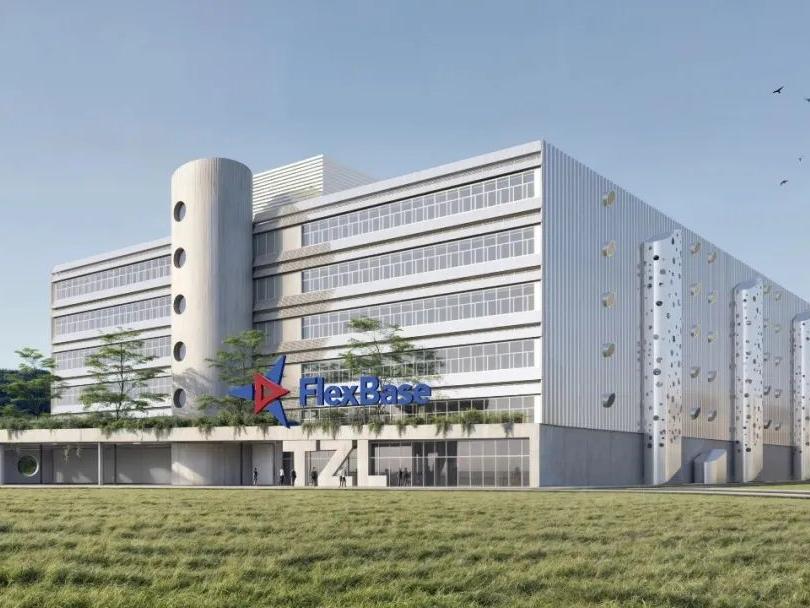
In May 2026, the small town of Laufenburg in the Swiss canton of Aargau welcomed a landmark project: the Flexbase Group officially broke ground on an 800 MW/1.6 GWh redox flow battery energy storage system. This project is not only Europe’s largest flow battery energy storage facility but also integrates an AI data center with a district heating network, painting a vision of the future where clean energy infrastructure and digital technology are deeply intertwined.
Located at the grid interconnection hub in Laufenburg, the 20,000-square-meter site sits precisely at the junction of the transmission networks of Switzerland, Germany, and France, with as many as 41 cross-border transmission lines. Its strategic significance is self-evident: the “Laufenburg Star,” which began operations in 1958, was the first major connection point in Europe’s interconnected grid and continues to play a critical role in the cross-regional distribution of green electricity. The Flexbase Group chose to build its energy storage system here precisely because of this hub’s unique geographical advantages—not only can it smooth out cross-border power fluctuations and enhance the stability of the Central European grid, but it can also generate greater economic benefits through cross-border power arbitrage and grid ancillary services.
According to the development plan, the project officially broke ground this month following regulatory approval, with the goal of achieving commercial operation by the summer of 2028. Although Flexbase Chief Marketing Officer Raphael Schmid did not disclose the specific energy storage system supplier, and the company has not announced the exact investment amount, the Badenische Zeitung reported that this is a “multi-billion-dollar” project.
What does a 1.6 GWh energy storage capacity mean? By comparison, the largest operational battery storage facility in the UK currently has a capacity of 320 MWh, while most grid-scale projects in Germany range between 50 and 200 MWh. Even on a global scale, the Laufenburg project will rank among the world’s largest single-site energy storage systems. This scale is sufficient to meet the daily electricity needs of approximately 300,000 households and provide stable peak-shaving support to the grid through its 4-hour continuous discharge capability.
The project employs redox flow battery technology, which uses liquid electrolytes—typically based on vanadium or bromine—to store energy. Compared to today’s mainstream lithium-ion batteries, flow batteries offer unique advantages for long-duration energy storage: their electrolytes contain up to 75% water, making them non-flammable and effectively mitigating the safety risks commonly associated with lithium-ion systems. Furthermore, flow batteries do not degrade and do not require rare raw materials such as lithium or cobalt, resulting in a lower environmental impact over their entire lifecycle.
However, what truly sets the Laufenburg project apart from conventional energy storage projects is its integrated development model. Here, the energy storage system is not a standalone facility but is closely integrated with an AI data center and a district heating network, forming a complete energy ecosystem. The AI data center, located on the same site, will prioritize the use of renewable electricity stored in the flow batteries, dynamically matching computing power demands with grid loads through a real-time energy management system. The waste heat generated by the data center’s operations is not wasted; instead, it is converted into hot water via a three-stage waste heat recovery system and fed into the district heating network. This provides heating for municipal areas in Laufenburg and surrounding regions within a radius of tens of kilometers, as well as for industrial facilities with high heat demands. It is projected to replace 50,000 metric tons of standard coal worth of traditional gas-fired heating annually.
This closed-loop energy ecosystem—comprising “generation, storage, consumption, and reuse”—demonstrates a new trend in the integrated development of clean energy infrastructure, artificial intelligence, and smart thermal energy systems. Flexbase estimates that the integrated facility will create 300 to 350 local jobs across various sectors, including energy storage operations and maintenance, data center management, and heating system operations.
From a broader perspective, the launch of the Laufenburg project coincides with a critical period in which European countries are accelerating their efforts to meet renewable energy targets. The EU has explicitly set a target of 45% renewable energy by 2030, yet issues such as grid integration bottlenecks and system stability challenges resulting from high proportions of renewable energy are becoming increasingly prominent. Against this backdrop, the synergistic operation of flow batteries’ long-duration energy storage capabilities, AI data centers’ flexible load regulation, and district heating networks’ waste heat recovery provides a replicable technical pathway and business model to address these challenges.
Analysts estimate that upon completion, the project will absorb over 5 TWh of green electricity annually, reducing carbon emissions by approximately 2 million metric tons, and will serve as a core hub for cross-regional renewable energy distribution in Europe. Flexbase Group stated that it will further explore the integrated application of flow batteries with green hydrogen production and smart microgrids to drive the deep decarbonization of energy systems.
The launch of the Laufenburg project marks not only a significant milestone for Europe’s energy storage industry but also provides a model for the global energy system transition. It demonstrates that when energy storage technology, digital computing power, and thermal energy utilization are organically integrated, the potential of clean energy infrastructure will far exceed the single function of “energy storage,” thereby becoming a key engine driving the overall upgrade of regional energy systems. As the 2028 commercial operation date approaches, we have every reason to anticipate that this “zero-carbon energy super-hub” will come online as scheduled, contributing a significant practical model toward achieving carbon neutrality goals in Europe and beyond.