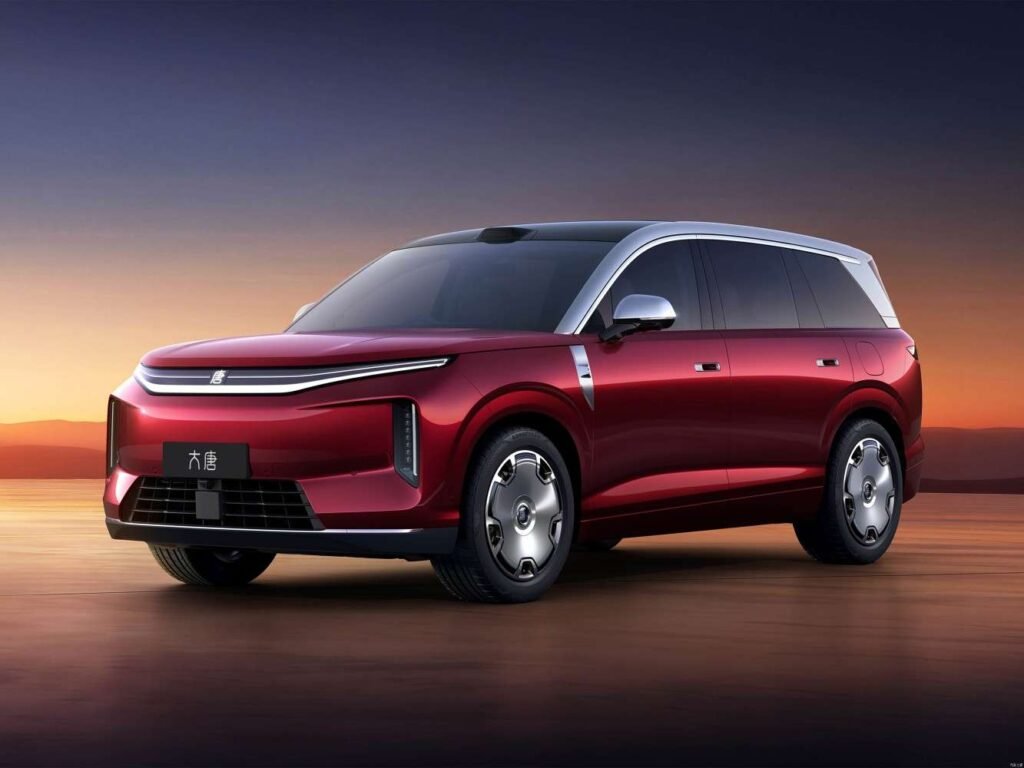
On June 17, 2026, the BYD Great Tang EV officially launched. The new model is the flagship SUV recently introduced by BYD’s Dynasty Network. The exterior features the latest family design language from BYD’s Dynasty Network. With a length exceeding 5.2 meters, the AI-powered cockpit is equipped with BYD’s self-developed DiLink 6.0 system, which integrates the “Qianwen” and “DeepSeek” language models. The driver-assistance system features the “Eye of the Sky 5.0” system, and the entire lineup comes standard with the “Yunnian-A” intelligent air suspension system. Powered by a pure-electric drivetrain, it is equipped with second-generation Blade Batteries and a 1,000-volt high-voltage architecture across the entire vehicle. It offers a maximum range of 950 km and accelerates from 0 to 100 km/h in as little as 3.9 seconds. The new model is available in four trim levels, with prices ranging from ¥239,900($35200) to ¥309,900($45500).
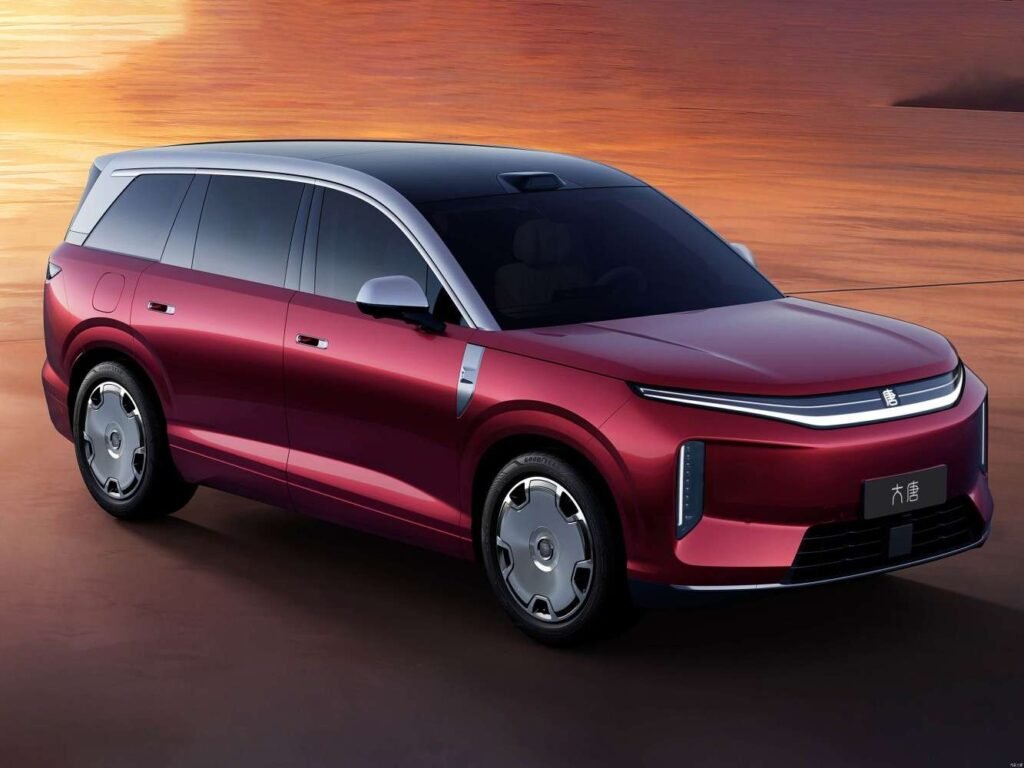
Externally, the Great Tang EV adopts the latest generation of BYD’s Dynasty Grid design language, presenting an overall stance that is both dignified and dynamic. At the front, the closed-off grille design aligns with its status as a pure-electric vehicle. It features a 2.41-meter-long “Flying Eaves at Dawn” full-width LED daytime running light strip, composed of 396 LED lights, which extends horizontally to the front fender area, creating a highly distinctive visual effect. The logo is embedded in the center of the light strip and illuminates in sync with it. Vertical air ducts on both sides of the front bumper help optimize airflow at the front of the vehicle.
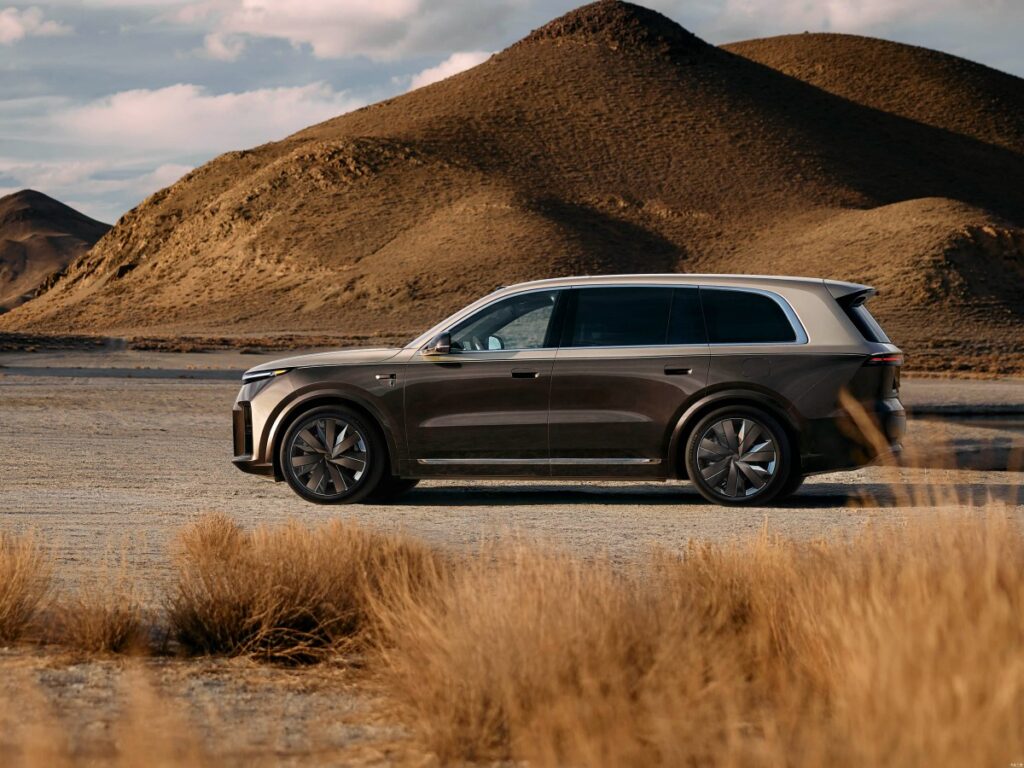
The side profile features clean, straight lines, with a character line running from the headlights to the taillights. The roof slopes downward from the B-pillar, complemented by hidden roof rails. The doors feature semi-recessed mechanical door handles, and the lower body is equipped with black plastic trim accented with chrome strips. In terms of body colors, the Great Tang EV offers five solid colors and three two-tone color schemes. According to the manufacturer, the color schemes draw inspiration from Tang Dynasty court glaze colors and traditional landscape paintings. The new vehicle measures 5,263 mm in length, 1,999 mm in width, and 1,790 mm in height, with a wheelbase of 3,130 mm—meeting the standards of mainstream full-size SUVs.
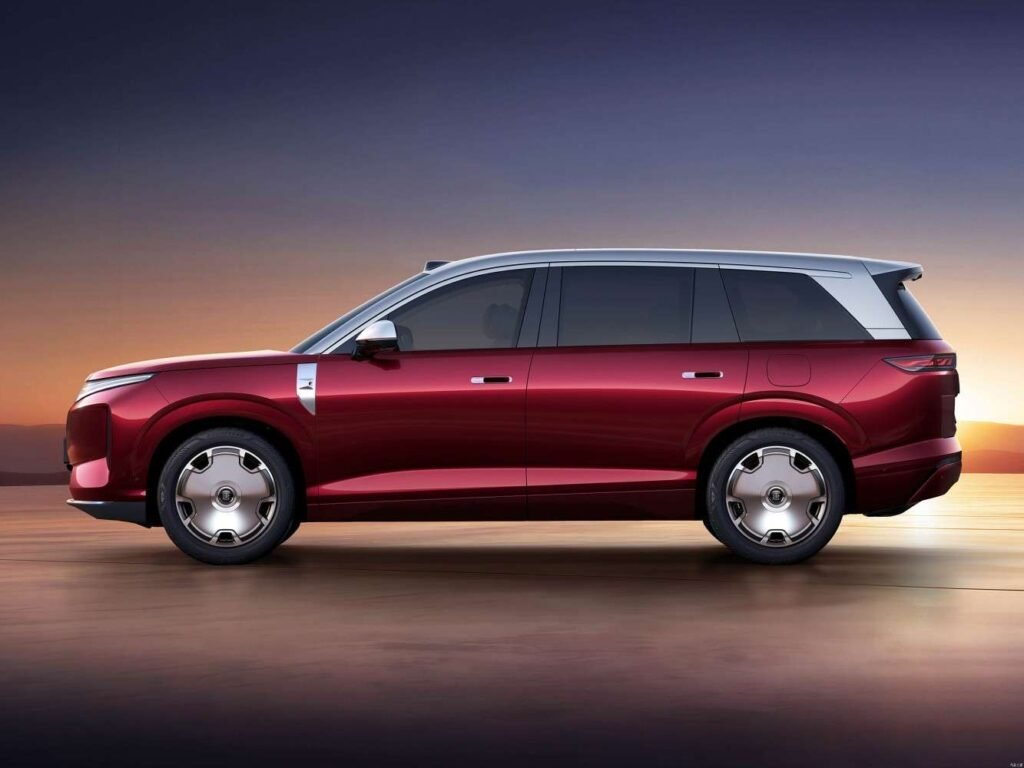
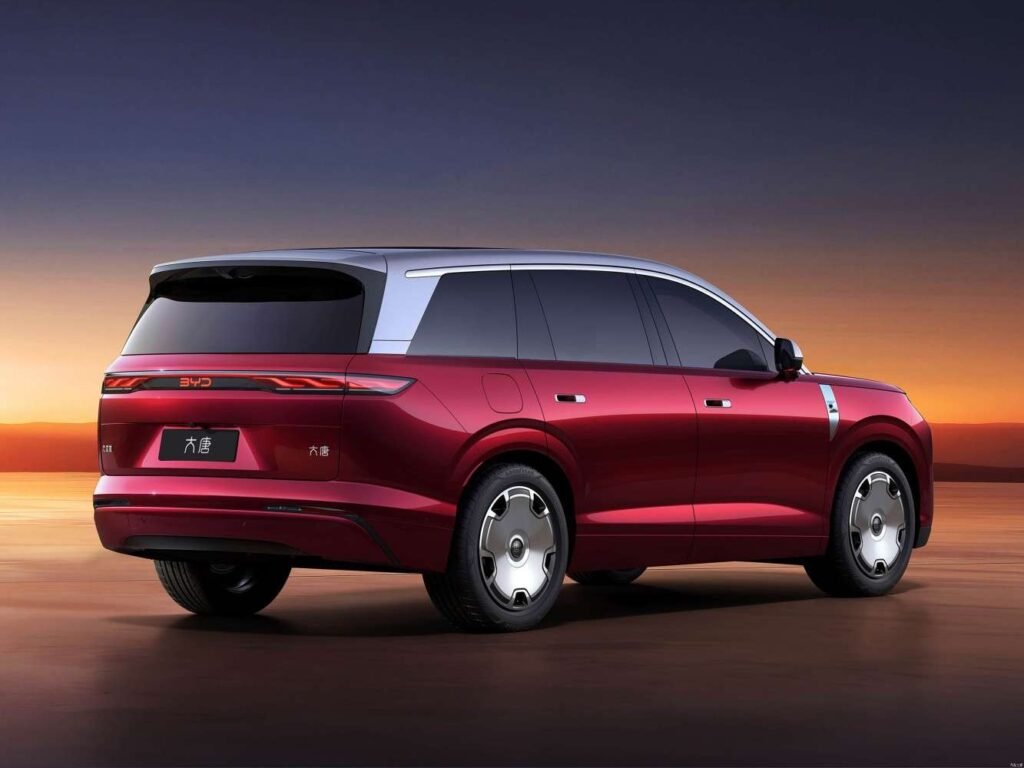
The rear features a full-width taillight cluster with a woven texture resembling a Chinese knot inside the light housing, which, when illuminated, exudes distinctively Chinese aesthetic characteristics. Below the taillights is an illuminated “Build Your Dreams” emblem. The lower section of the rear bumper is fitted with a diffuser-style skid plate, while a small spoiler extends from the rear of the roof, incorporating a high-mounted brake light.
The interior features extensive Nappa leather upholstery and wood-grain trim panels. The center console adopts a flat, horizontal, full-width design, and the cabin ambient lighting offers 256 adjustable colors and supports a music-synchronized mode. The climate control system is a three-zone independent automatic unit, with third-row air vents located on both sides of the roof; it also includes a PM2.5 filter and a negative ion generator.
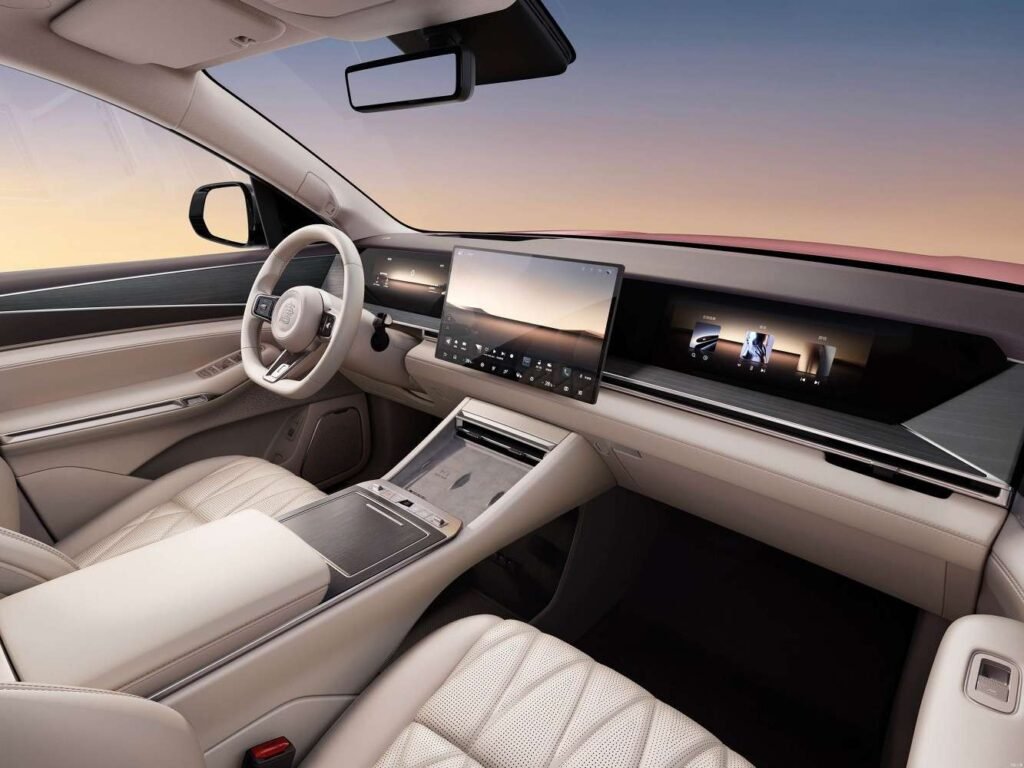
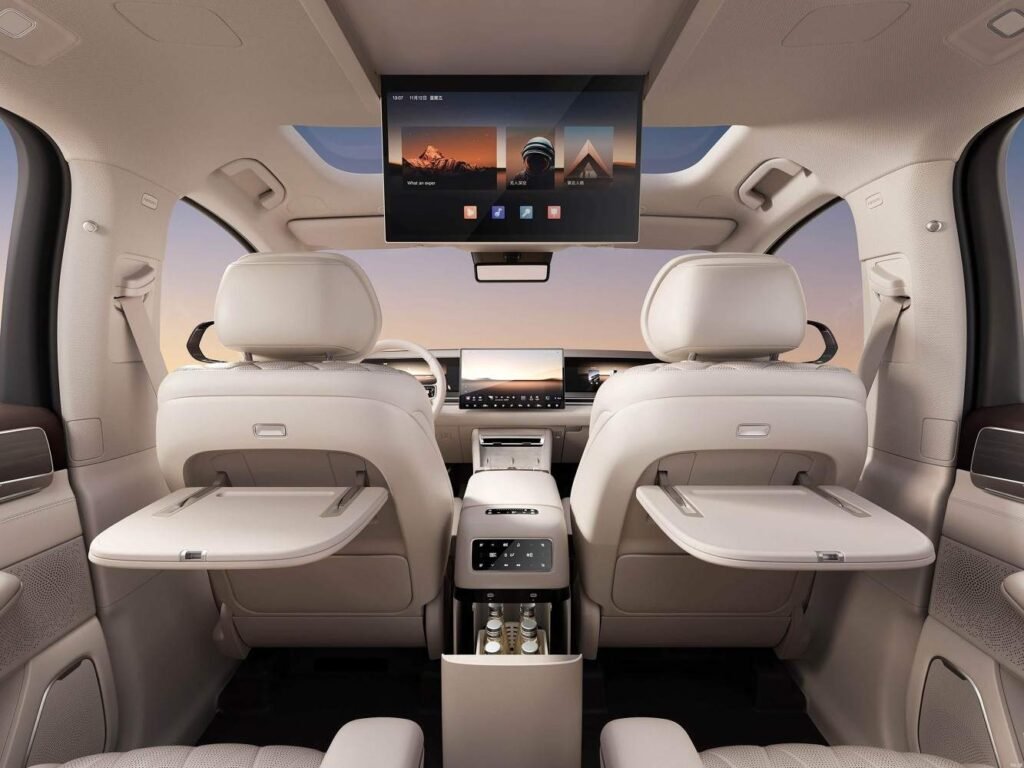
Three screens are positioned in front of the instrument panel: a 12.3-inch fully digital instrument cluster; a 15.6-inch floating center console screen that supports rotation and split-screen display; and a 12.3-inch passenger-side entertainment screen. Additionally, the vehicle is equipped with a HUD (Head-Up Display) system, and a 17.3-inch overhead entertainment screen is mounted above the second row, capable of playing videos independently or syncing with the center console screen.
In terms of the smart cockpit, the AI-powered cabin runs BYD’s in-house developed DiLink 6.0 system, which integrates the “Qianwen” and “DeepSeek” large language models. It supports fuzzy semantic interaction, multi-round conversations, navigation intent prediction, and vehicle control command suggestion. On the hardware side, the vehicle is equipped with a Qualcomm Snapdragon 8295P cockpit chip. The intuitive control panel—a combination of physical knobs and a touchpad—supports NFC one-touch smartphone pairing and allows users to customize multiple functions.
In terms of intelligent driving assistance systems, the “Eye of the Gods 5.0” is standard across the entire lineup. Hardware configurations include: 1 roof-mounted lidar, 5 millimeter-wave radars, 12 ultrasonic radars, and 11 cameras. Data is processed by two NVIDIA Drive Orin-X chips, each with a computing power of 254 TOPS. Functionally, it supports NOA on highways and in urban areas, as well as full-scenario automatic parking and valet parking.
In terms of interior space, four-door magnetic-closing doors are standard across the lineup, featuring a magnetic locking mechanism. The seating configuration adopts a “2+2+3” seven-seat layout, consisting of two seats in the first row, two individual seats in the second row, and three seats in the third row. This three-row layout marks the first time such a configuration has been used in a Chinese-brand SUV of this class. The manufacturer reports a body-in-white space utilization rate of 89.3%. A 201mm-wide central aisle is provided between the two independent seats in the second row, allowing passengers to access the third row directly without having to fold down the second-row seats.
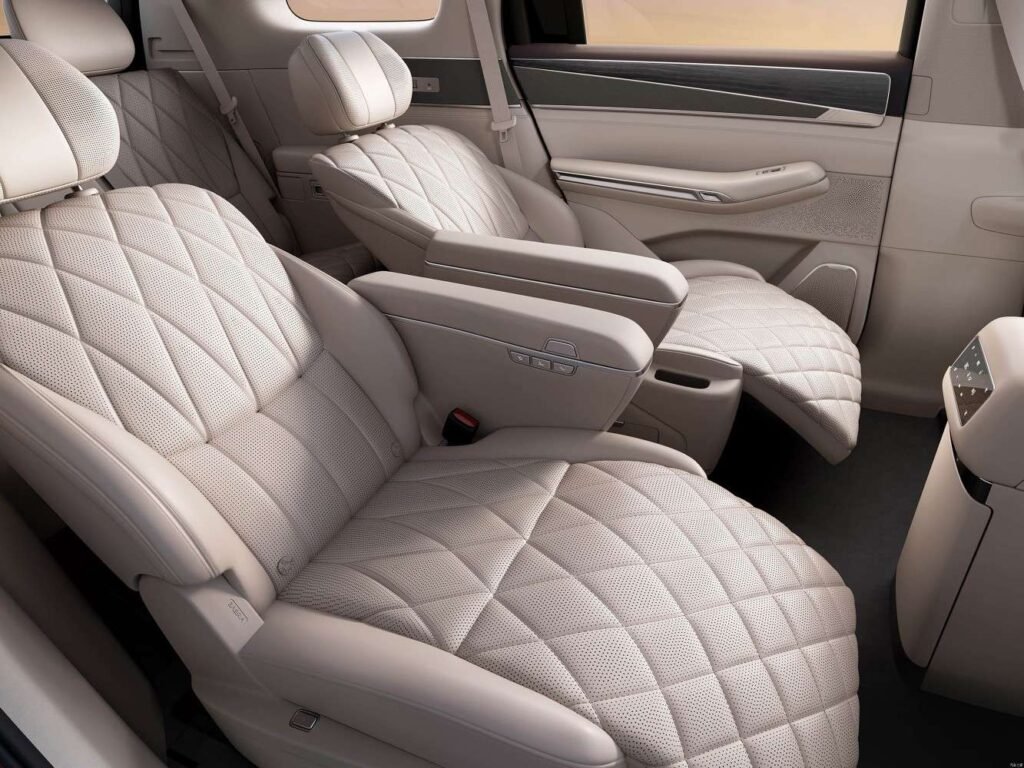
In terms of interior space, four doors with magnetic latches come standard. The seating configuration features a “2+2+3” seven-seat layout, consisting of two seats in the first row, two individual seats in the second row, and three seats in the third row. This three-row layout marks the first time such a configuration has been used in a Chinese-brand SUV of this class. The official body-in-white space utilization rate is 89.3%. A 201mm-wide central aisle is located between the two independent seats in the second row, allowing passengers to access the third row directly without having to fold down the second-row seats.
The standard trunk volume is 580L. The third row features electric folding, and the second row supports electric reclining. When fully folded down, the cargo area extends to a maximum depth of 2160mm, creating a completely flat loading floor. Additionally, the all-electric version offers an extra 252L of front trunk space, equipped with a drain hole and interior lighting.
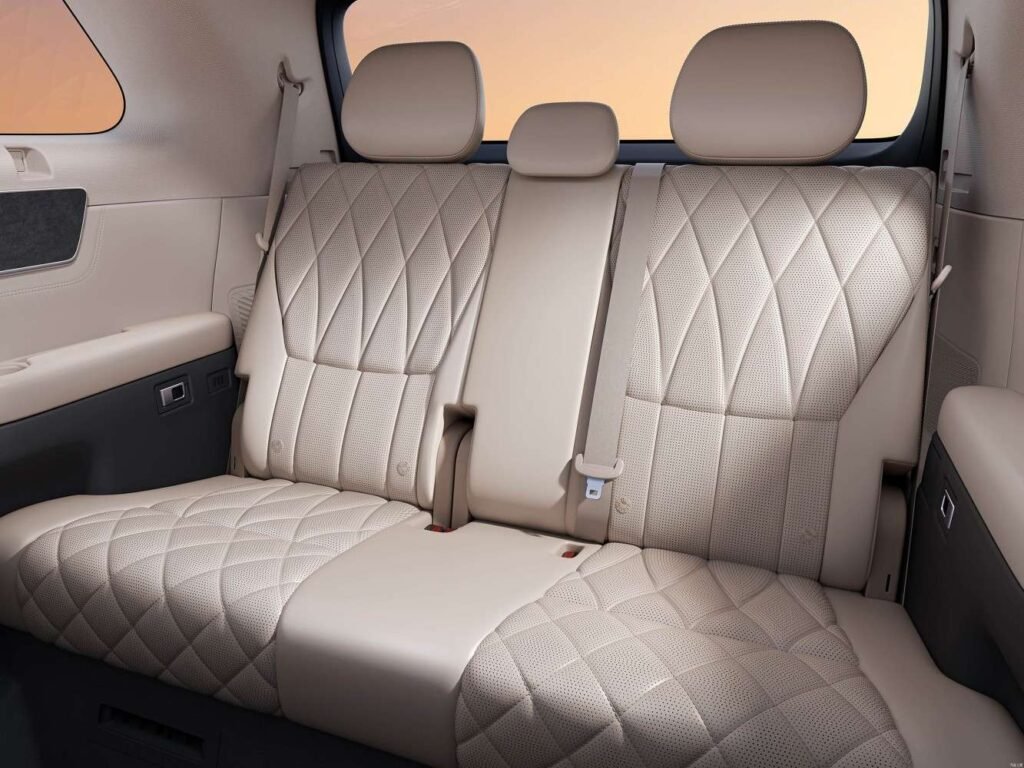
Regarding the seats, the first row features dual zero-gravity seats with 12-way power adjustment, ventilation, heating, and three memory settings; the second row features dual zero-pressure aviation-style individual seats, equipped as standard with ventilation, heating, and a 10-point pneumatic massage function. The backrests can be adjusted to a maximum angle of 146°, and the leg rests are electrically adjustable up to 70°. The third-row seats support electric backrest adjustment and feature two-level heating.
In terms of comfort features, the roof is equipped with a “Sky Mirror” panoramic sunroof measuring 2.53 square meters, constructed with double-layered insulated glass and a PVB sound-insulating film in the middle layer. The audio system is by Devialet, with a total power output of 1,800 W and a 7.1.4-channel layout comprising 27 speakers (including 4 sky channels). The onboard refrigerator has a capacity of 6.8 L, with a temperature range of -6°C to 50°C, and features an electric sliding door.
In terms of powertrain, the Great Tang EV offers three powertrain configurations, all based on a 1,000-volt high-voltage architecture. Rear-wheel-drive models are equipped with a single permanent magnet synchronous motor on the rear axle. In terms of performance, the 800KM rear-wheel-drive version delivers a maximum power output of 300 kW and a maximum torque of 520 N·m; the 950KM rear-wheel-drive version delivers a maximum power output of 370 kW (503 horsepower) and a maximum torque of 620 N·m; the 850KM all-wheel-drive model features a front asynchronous induction motor paired with a rear permanent magnet synchronous motor. The front motor delivers a maximum power of 215 kW, while the rear motor delivers 370 kW, resulting in a combined system power of 585 kW and a combined torque of 980 N·m, with a 0–100 km/h acceleration time of 3.9 seconds.
The powertrain utilizes BYD’s second-generation Blade Battery, featuring lithium iron phosphate (LFP) cells, with the pack’s energy density increased to 165 Wh/kg. Two capacities are available: 105.79 kWh (800KM rear-wheel-drive version) and 130.15 kWh (950KM rear-wheel-drive version and 850KM all-wheel-drive version). The battery pack incorporates CTB (Cell-to-Body) technology, integrating the battery directly into the vehicle’s body structure. Supported by a 1,000-volt high-voltage architecture, the vehicle achieves a peak charging power of 600 kW. With flash-charging technology, the vehicle can go from 10% to 70% in 5 minutes and from 10% to 97% in 9 minutes.
For the chassis system, the entire Great Tang EV lineup comes standard with the YunNian-A intelligent air suspension system, which utilizes dual-chamber air springs and continuously variable damping shock absorbers. The suspension configuration features a front double-wishbone independent suspension and a rear five-link independent suspension. It supports both height and damping adjustment. The Road Anticipation feature uses a forward-facing camera and LiDAR to detect road surface undulations ahead, adjusting suspension stiffness and damping in advance. The rear-wheel steering system marks BYD’s first implementation of this technology; with a maximum rear-wheel steering angle of 14°, it enables the vehicle to parallel park by shifting laterally.