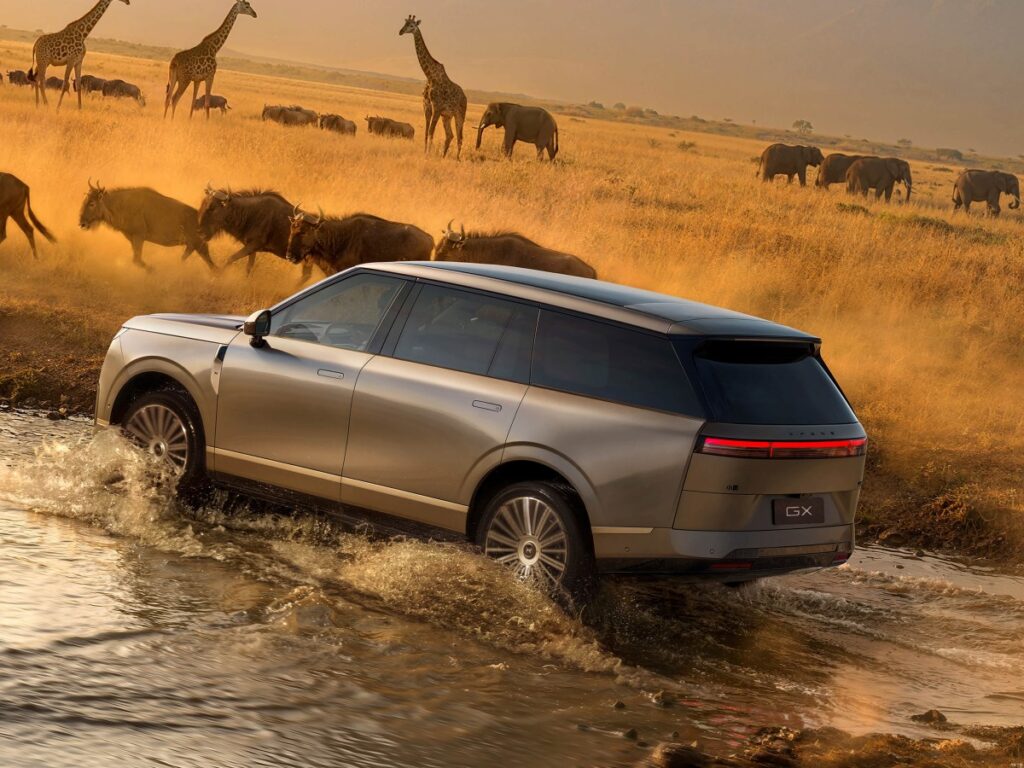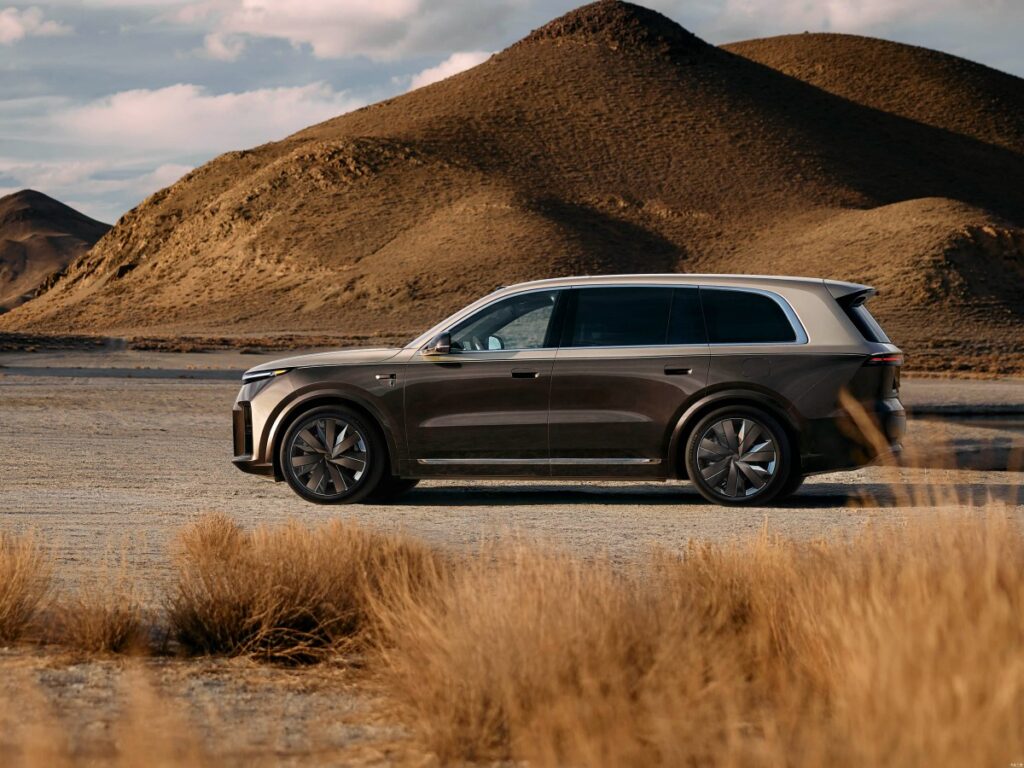
Over the past few years, Li Auto has excelled at packaging complex technologies into concrete family-oriented scenarios.
Range-extending technology was designed to alleviate range anxiety for family users, while features like refrigerators, flat-screen TVs, and large sofas were intended to redefine the boundaries of a family SUV’s functionality. Li Auto’s past success has largely stemmed from this ability.
However, the launch of the all-new Li Auto L9 Livis signals a new direction. This time, Li Auto is aiming to go beyond simply “upgrading its flagship family SUV.” As Li Xiang recently articulated in his discussion of embodied intelligence, the all-new Li Auto L9 Livis serves more as a transitional prototype. Li Auto is attempting to extend the product capabilities it has built around family scenarios into the underlying technological and organizational frameworks.
If the previous phase of Li Auto addressed the question of “how to build a car that better understands family users,” this time the question has shifted to: Once a car possesses stronger perception, judgment, and action capabilities, how far will the boundaries of an automaker be pushed?
Li Xiang refers to this direction as embodied intelligence. He posits that “autonomous driving is the first half of embodied intelligence, while general-purpose humanoid robots are the second half.” This statement may sound like a grand technological assertion, but viewed within the context of Li Auto’s own development trajectory, it actually points to a more practical issue. Li Auto is no longer content with simply creating a single blockbuster model; instead, it aims to build a set of foundational capabilities for the next decade centered around chips, models, operating systems, perception systems, and actuators.
For the embodied intelligence industry, humanoid robots are still in their early stages. Before they can enter households and open environments on a large scale, they must overcome multiple hurdles related to cost, reliability, generalization capabilities, and safety. The automotive industry, however, is already a mature, trillion-dollar sector. Therefore, breakthroughs in autonomous driving are likely to serve as a testing ground for the scaled deployment of embodied intelligence.
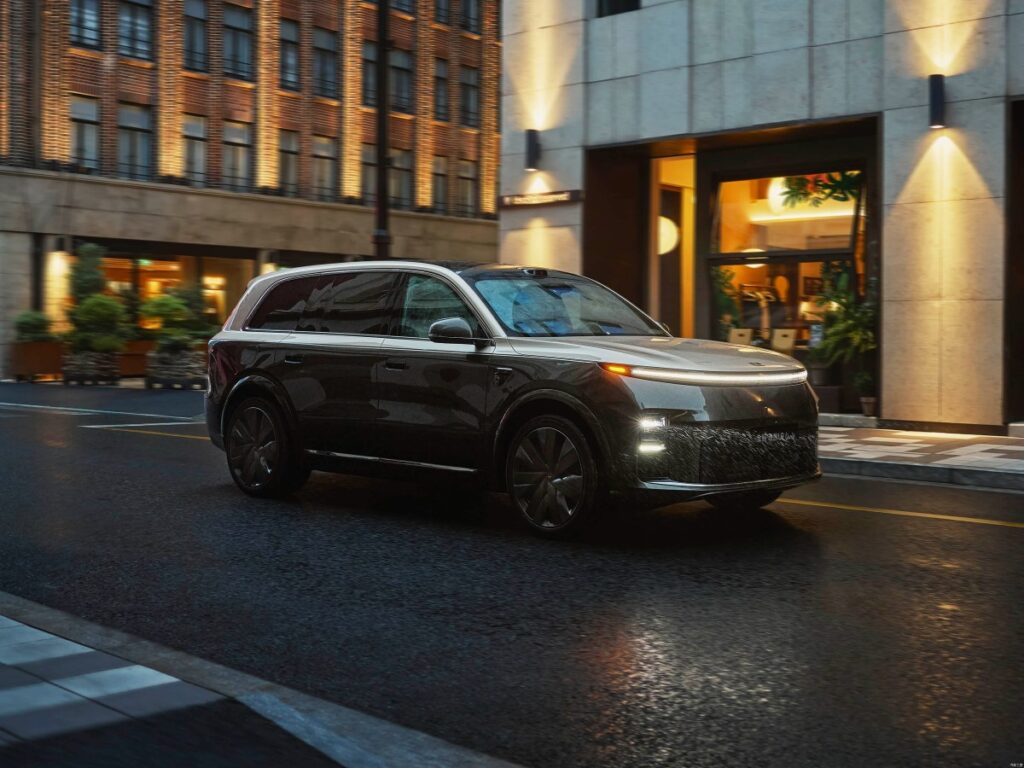
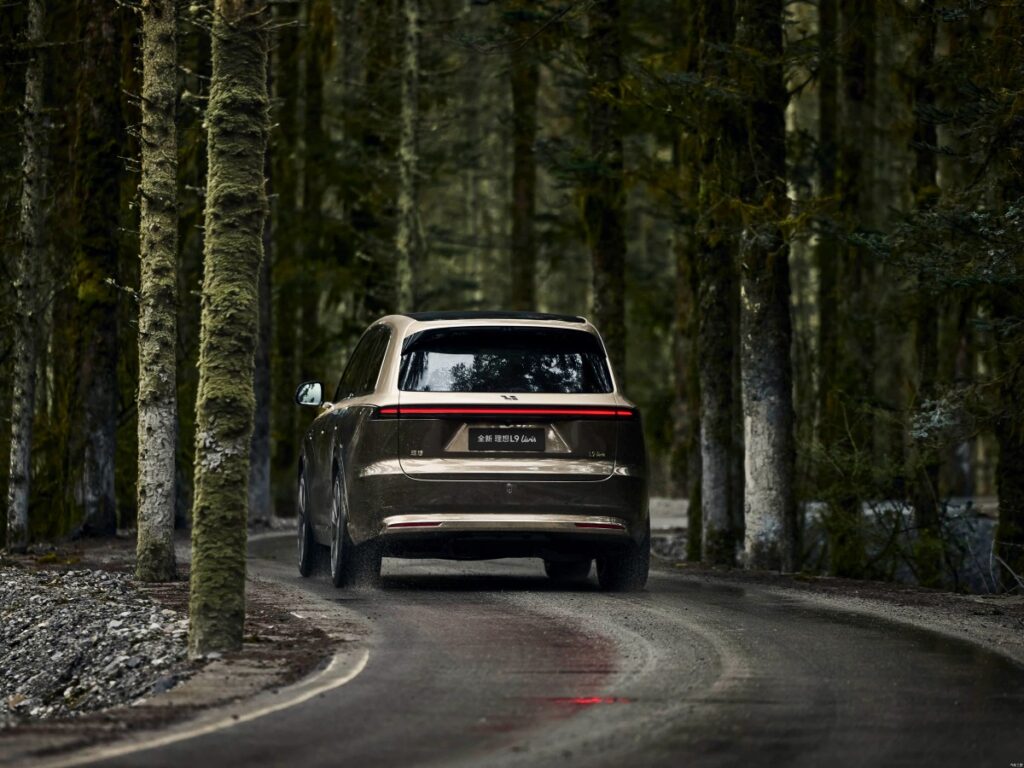
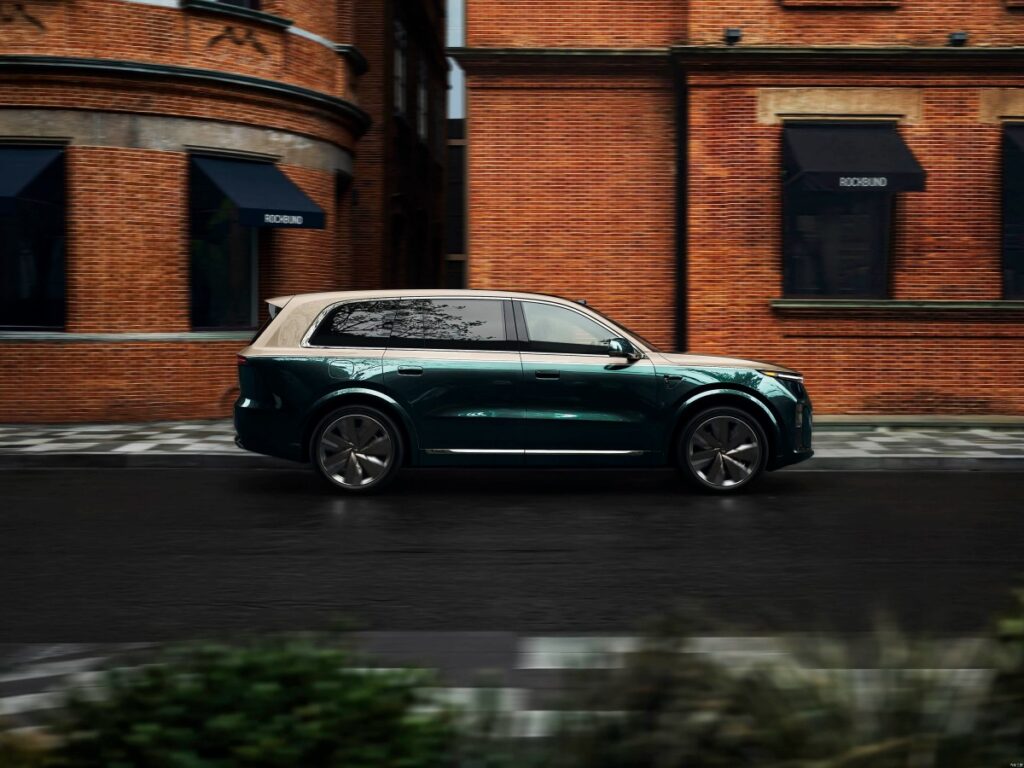
The all-new Li L9 is the first concrete manifestation of this strategic shift. It also marks the first time Li Auto has integrated its self-developed chips, perception models, the VLA driver model, by-wire chassis, active suspension, and operating system into a single product framework.
It remains a family SUV and must still face direct sales competition in the high-end new energy vehicle market. But behind the product, Li Auto is undergoing a deeper transformation—shifting from an automaker skilled at defining family vehicle needs to a technology company striving to master the foundational capabilities of “intelligentizing the physical world.”
Why Is Li Auto Talking About “Embodied Intelligence”?
To understand Li Auto’s embodied intelligence strategy, it may be helpful to start with the industry logic.
Over the past decade, AI has primarily transformed the digital world. Text, images, code, search, and knowledge management have all been reshaped by large language models. However, changes in the physical world have been relatively slow. Interactions with the environment in people’s daily lives still rely on humans to carry out.
The automobile is one of the key gateways for AI to enter the physical world. Compared to humanoid robots, cars possess a more mature industrial chain, clearer use cases, and a larger-scale data ecosystem. They are inherently “embodied”: equipped with sensors to perceive the environment, a computing platform to process information, a control system to execute actions, and an operating system to coordinate all modules. In this sense, a car with advanced autonomous driving capabilities is, in itself, a product of embodied intelligence.
Li Xiang has already broken down the development of embodied intelligence into a relatively clear industrial roadmap: the first half is autonomous vehicles, and the second half is general-purpose humanoid robots.
In the first half—autonomous vehicles—Li Xiang divides the journey into three stages: 2018 to 2023 is the L2 driver-assistance stage; 2023 to 2028 is the L3 autonomous driving stage; 2028 to 2033 is the L4 autonomous driving stage.
In the second half, general-purpose humanoid robots will enter three new stages: from 2030 to 2035, they will possess generalization capabilities equivalent to a 6-year-old child; from 2035 to 2040, they will reach the level of a 12-year-old; and from 2040 until the realization of AGI, they will possess generalization capabilities approaching those of an 18-year-old adult.
According to Ideal’s own technological classification, the L3 stage from 2023 to 2028 corresponds to 2D ViT perception, pre-trained models, end-to-end control, and computing power of approximately 2,000 TOPS; whereas the L4 stage from 2028 to 2033 will further evolve toward 3D ViT perception, stable pre-trained models, a fully autonomous control system, and computing power approaching 10,000 TOPS.
From this perspective, the perception, models, chips, operating systems, and control capabilities accumulated in the first half of this journey are likely to become the foundational capabilities for robots in the second half. Li Auto views both autonomous vehicles and general-purpose humanoid robots as core forms of embodied intelligence products, and anticipates a high degree of overlap between future L4 autonomous driving users and general-purpose humanoid robot users.
Therefore, what truly merits attention about Li Auto this time is not merely that it has “developed its own chips” or “created a by-wire chassis,” but rather that these technical capabilities have already partially surpassed the basic requirements of the current stage, representing Li Auto’s redesign of its future growth trajectory.
Organizational Capabilities Adjustments Behind the Strategy
If viewed solely through the lens of products and technology, Li Auto’s strategic moves could easily be interpreted as “stepping up AI R&D.” However, judging from a recent conversation between Li Xiang and Luo Yonghao, Li Auto’s deeper transformation lies in using AI to restructure its organization and production processes.
During the conversation, Li Xiang repeatedly mentioned that the most important task over the past 200-plus days has been learning about AI. He not only uses AI tools himself but also encourages employees to adopt tools like Claude Code and OpenClaw, integrating AI into real-world workflows through training and knowledge-sharing.
Li Xiang does not fully subscribe to the concept of a “one-person company.” He believes that establishing a stable production environment is difficult; AI does not create things out of thin air, but rather integrates into real business processes to improve R&D, collaboration, and delivery efficiency. This is also the key logic behind Li Auto’s internal push for AI—he does not treat AI as a personal productivity tool, but rather embeds it into the R&D, operations, product, and management chains.
This is particularly important for an automaker. Cars are complex industrial products involving hardware, software, supply chains, manufacturing, quality, safety, distribution channels, and services. While improving efficiency at individual points is certainly important, the real challenge lies in cross-departmental collaboration.
Li Auto completed a transformation of its R&D system in early 2026, shifting from a structure based on hardware and software functions to one reorganized around the concept of “building embodied intelligence,” thereby breaking down the barriers between hardware and software teams in traditional R&D. Following this transformation, the iteration cycle for training intelligent assisted driving models was reduced from two weeks to one day.
It is evident that competition in the smart electric vehicle sector is shifting from product definition capabilities to organizational iteration capabilities.
Li Xiang’s perspective on AI talent is also noteworthy. During the discussion, he mentioned that the employees with the highest token consumption within the company are not necessarily the top performers under traditional standards; some may lack strong communication skills or have had limited access to resources in the past, but they possess “exceptional intellect.” Once provided with tokens and a supportive business environment, they can drive significant transformation.
This indicates that Li Auto is redefining productivity within the organization. In the past, companies valued reporting capabilities, management hierarchy, and resource coordination; in the AI era, those who can truly use AI to transform business processes, build production environments, and close the loop may become the new key talent.
Therefore, Li Auto’s transformation from an automaker to an embodied intelligence enterprise cannot be understood merely as a product transformation. It is, more fundamentally, an organizational engineering project: recombining people, AI tools, business processes, and technology platforms. The ultimate goal is not to replace humans with AI, but to enable the organization to possess higher-density creativity and execution capabilities.
Full-Stack In-House Development Is the Ticket to Embodied Intelligence
The most frequently questioned aspect of an ideal embodied intelligence strategy is: Why would an automaker undertake such a resource-intensive full-stack in-house development effort?
In the traditional automotive industry, an automaker’s core competencies largely consist of product definition, supply chain integration, manufacturing, and distribution capabilities. For components such as engines, transmissions, chassis, and electronic control systems, there are established supplier ecosystems for each module. Through procurement and integration, automakers can quickly launch competitive products.
However, the challenge with embodied intelligence lies in the fact that it is not about the intelligence of a single module, but rather how an entire system understands the world in real time and interacts with it. The efficiency of coordination between perception, models, computing power, the operating system, and actuators directly determines a vehicle’s performance in complex scenarios.
Li Xiang uses the human body to illustrate this system: the chip is the heart, the model is the brain, the perception system is the eyes, the chassis is the limbs, and the operating system is the nervous system. The upper limit of an embodied intelligence product’s capabilities depends on whether the entire system can be designed, orchestrated, and iterated in a unified manner.
This is precisely the underlying reason why Li Auto insists on full-stack in-house development.
Take chips as an example. Li Auto’s self-developed 5-nanometer Mach M100 chip employs a dataflow architecture, delivering a combined computing power of 2,560 TOPS across two chips. However, for Li Auto, the significance of self-developed chips lies not merely in “higher computing power,” but in the ability to co-design chips and models. As future intelligent driving models grow increasingly complex, a mismatch between chip architecture and model requirements could result in high computing power but insufficient actual efficiency.
Now consider the operating system. The value of Livis OS lies in its ambition to serve as the “nervous system” of the vehicle’s intelligent entity. As vehicles transition to fully remote-controlled operation, actuators such as steering, braking, and suspension must be dynamically managed by AI in real time. Consequently, system latency, safety redundancy, and control precision become critical issues. This implies that in the era of embodied intelligence, the core of automotive competition lies in establishing a reliable closed-loop system that integrates perception, decision-making, and control.
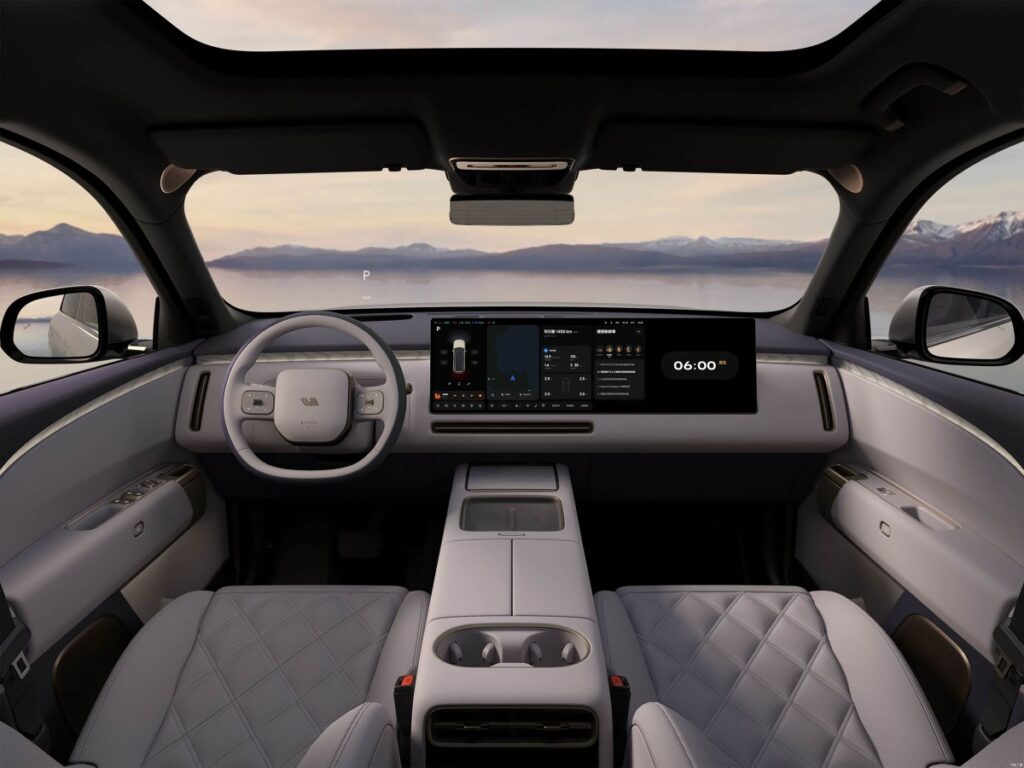
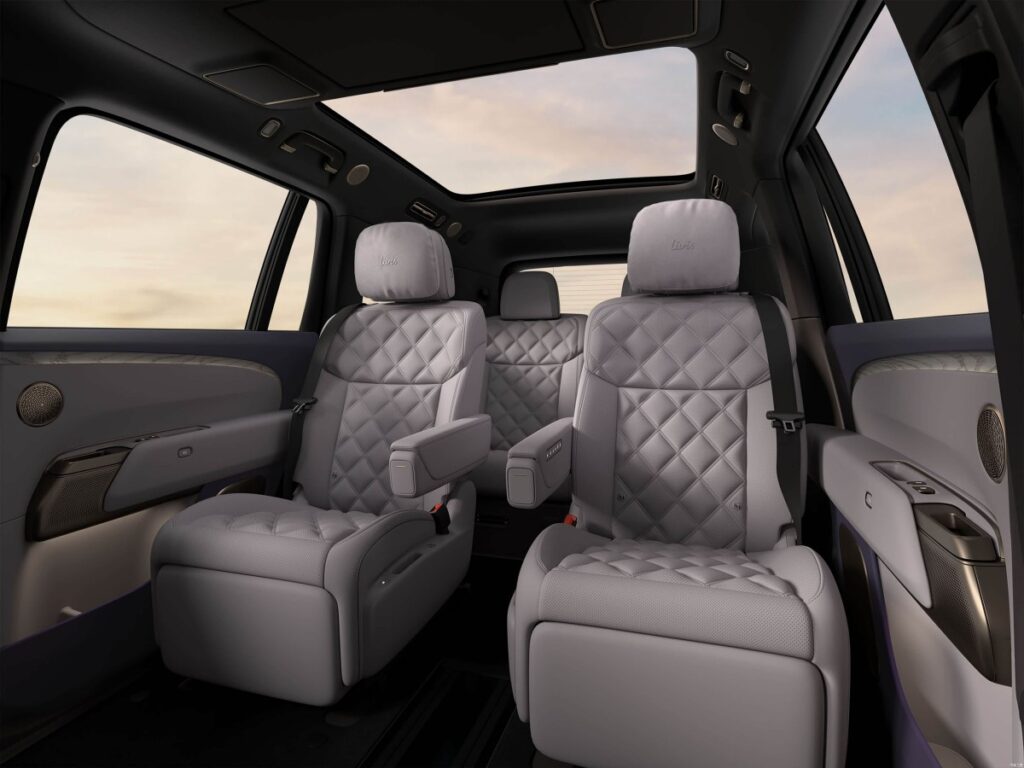
From a product perspective, the most significant change in the all-new Li Auto L9 Livis is not its exterior, interior, or comfort features, but rather that it marks the first time Li Auto has integrated its five core capabilities of embodied intelligence into a single production vehicle.
In terms of perception, the L9 Livis has evolved from 2D ViT to 3D ViT, unifying the three-dimensional geometric data from lidar with the semantic information from cameras during the encoding stage. At the model level, Li Auto has introduced the Mach VLA model. On the control front, it features a “fully integrated” by-wire chassis and an 800V active suspension system. Taken together, these technologies demonstrate that Li Auto’s ambition to prove “AI’s ability to control the physical world” now has a solid hardware foundation.
This also underpins the business logic behind Li Auto’s full-stack in-house development. In the short term, full-stack in-house development involves heavy investment, long development cycles, and high risks; however, in the long term, it offers the opportunity to create a technological generational gap and product differentiation. Data shows that Li Auto’s R&D investment reached 11.3 billion yuan in 2025, with AI-related spending accounting for 50%; in 2026, R&D investment is expected to remain around 12 billion yuan, with AI-related R&D still comprising approximately half of that total.
For Li Auto, this amounts to building competitive barriers for the next decade in advance. Especially as the smart EV industry enters a phase of homogenization, only companies that master the underlying technical architecture will be able to strike a more stable balance between user experience, safety, and cost.
Of course, full-stack in-house development does not automatically guarantee success. It requires sustained high investment, product sales to support cash flow, and organizational capabilities to manage complex R&D. However, as Li Xiang stated in his conversation with Luo Yonghao, “For Li Auto, investing in AI is not a risk. Not doing so is the real risk.” To a certain extent, this statement encapsulates the determination and conviction behind Li Auto’s current strategic shift.
Cars Are Becoming the Starting Point for AI in the Physical World
Li Auto’s decision to showcase embodied intelligence in the L9 does not mean this strategy is limited to a single flagship SUV. From a longer-term perspective, the signal it sends is this: as competition in the smart electric vehicle market becomes increasingly homogeneous, the automotive industry is searching for its next growth narrative, and embodied intelligence may become the point where the technology and automotive industries converge once again.
Over the past decade, China’s automotive industry has completed its transformation from mechanical products to smart devices. But today, range, interior space, features, charging infrastructure, and autonomous driving capabilities are rapidly converging. The industry’s true dilemma lies in determining what will drive differentiation in the next phase.
Li Auto’s answer is to reimagine the automobile within the broader context of the technology industry.
In Li Xiang’s view, autonomous driving addresses how machines perceive, judge, and act within road environments; whereas humanoid robots address how machines can integrate into homes, factories, and more complex open environments. Though their forms appear different, both fundamentally point to the same question: how can AI understand the real world and exert a stable, reliable, and controllable influence on the physical world?
This is also why Li Auto is reinvesting in chips, models, operating systems, and by-wire chassis. In the short term, these serve the automotive sector; in the long term, they may become the foundational capabilities for entering a wider range of smart devices. The automobile is the first mature platform because it features high-value hardware, well-defined scenarios, continuous data feedback, and users with sufficient purchasing power. But the automobile is not necessarily the end goal; it is more like the first large-scale training ground for AI in the physical world.
Of course, embodied intelligence is not a field that can be realized through concepts alone. Full-stack in-house development requires significant investment, and the robotics business also demands a longer validation cycle. Ultimately, the market will still judge based on product experience, safety and reliability, and commercial efficiency. The automobile can serve as the gateway for AI in the physical world, but only if it is first a vehicle that is sufficiently good, stable, and trustworthy.
The signal sent by the all-new Li L9 is clear: while the industry is generally mired in confusion over “what to compete on next,” Li is attempting to shift the focus of automotive competition from individual vehicle performance to a deeper competition over system capabilities. In the future, the true competition may come down to who can establish a complete system that connects perception, decision-making, and execution sooner.
Autonomous driving is just the beginning. The true new variable in the automotive industry is that it is becoming the first gateway for AI to enter the physical world. And what Li Auto is vying for is not merely market share for a flagship SUV, but a ticket to the next round of convergence between the technology and automotive industries.