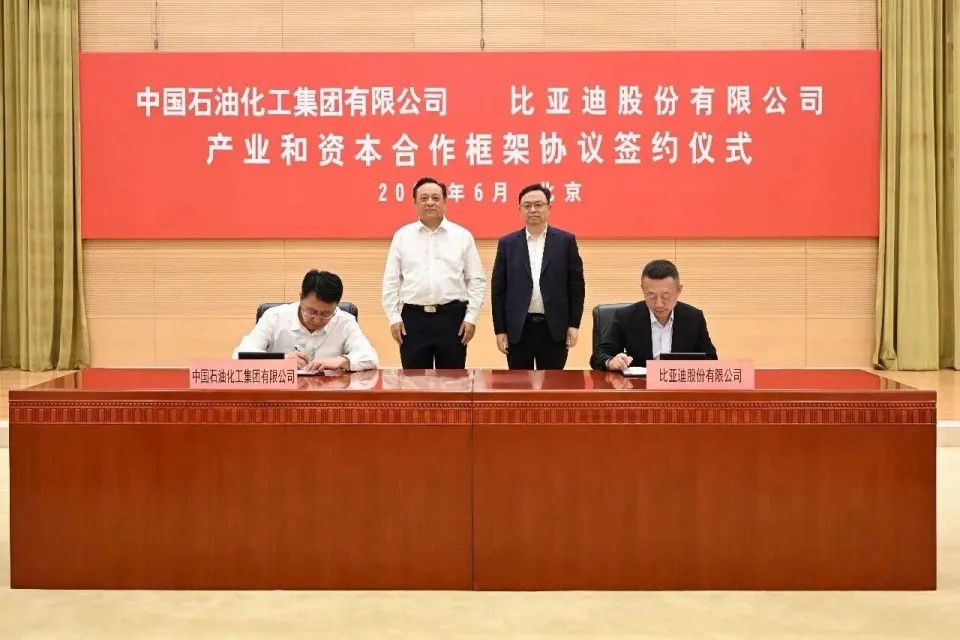
On June 3, BYD Co., Ltd. and Sinopec Group officially signed a framework agreement for industrial and capital cooperation in Beijing. This signing marks a shift in the focus of cooperation between the two industry giants from existing refined oil supply and the construction of integrated energy stations toward the deep integration of the new energy charging ecosystem. Under the guiding principle of “Uniting 10,000 Stations, Combining Fuel and Flash Charging,” the two parties will engage in multi-level cooperation across three key areas: joint development of charging networks, integration of vehicle owner ecosystems, and full-industry-chain synergy. BYD Chairman and President Wang Chuanfu and Sinopec Chairman Hou Qijun jointly attended the signing ceremony and witnessed the signing of the agreement.
According to the agreement, the primary task for both parties is to establish an interconnected charging network system. BYD is fully committed to advancing its “Flash Charging China Strategy,” with plans to build 20,000 flash-charging stations nationwide by the end of 2026; to date, over 6,100 stations have been completed. As the nation’s largest supplier of refined oil and petrochemical products, Sinopec possesses a nationwide energy service network, having built over 30,000 integrated refueling and charging stations and more than 14,000 charging and battery-swapping stations. Through this collaboration, the two parties will leverage Sinopec’s vast network of physical locations to deploy flash-charging stations on a large scale and operate them under standardized procedures. This will significantly shorten the timeline for the nationwide rollout of flash-charging infrastructure and reshape the energy-supply landscape for new energy vehicles.
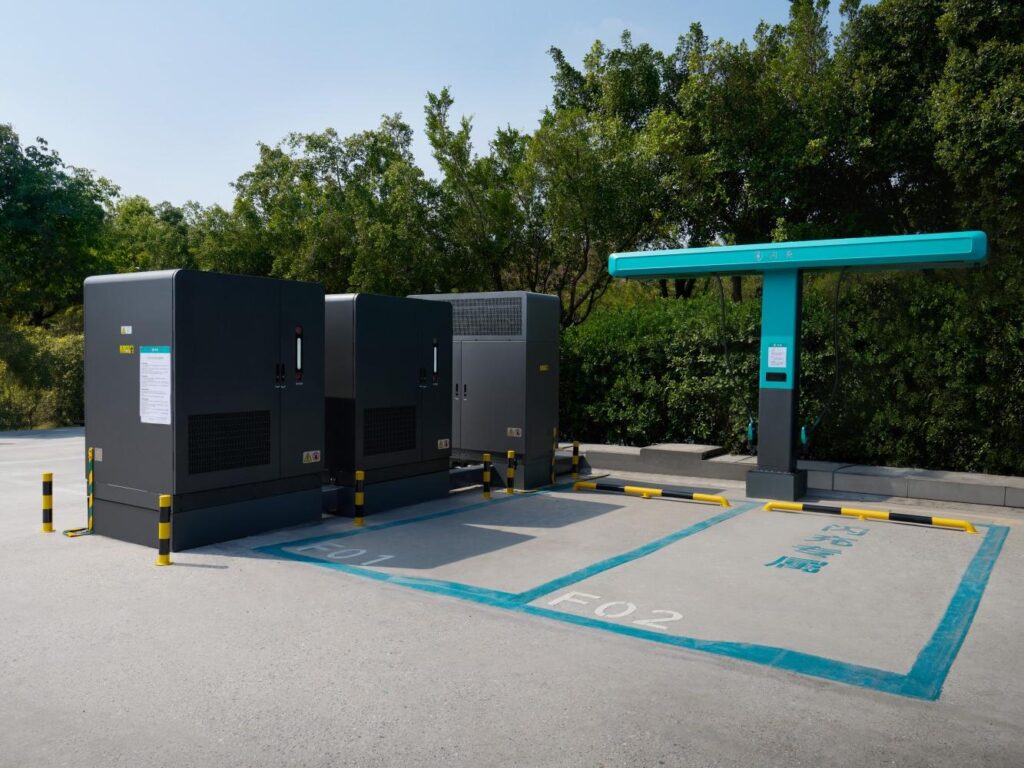
The underlying technology supporting this massive network is BYD’s newly launched second-generation Blade Battery and flash-charging technology. This technology effectively addresses the long-standing industry pain points of “slow charging” and “difficulty charging in low temperatures.” Actual test data shows that vehicles equipped with this technology can charge from 10% to 70% in just 5 minutes under normal temperature conditions, and reach 97% capacity in only 9 minutes; even in extreme cold conditions of -30°C, charging from 20% to 97% takes only 3 minutes longer than at normal temperatures. Furthermore, paired with rail-suspended T-shaped fast-charging stations capable of delivering a maximum power output of 1,500 kW per charging gun, along with features such as plug-and-charge and contactless payment, this energy-supply system is redefining the efficiency standards for all-electric mobility.
In addition to jointly building the hardware network, the two parties will extend their business reach into the automotive aftermarket and the upstream and downstream segments of the industry chain. On the user side, the two companies plan to build an integrated “energy supply + automotive services” ecosystem, explore comprehensive services combining solar power, energy storage, charging, and vehicle inspection, and promote the interoperability of membership systems and data-driven solutions to enhance the overall experience of green mobility. On the industrial side, the scope of cooperation covers multiple areas including automotive and battery materials, automotive fuels, energy storage applications, centralized procurement of materials, and data intelligence. This deep supply chain integration aims to achieve complementary advantages through resource consolidation and reduce overall operating costs.
For the traditional energy giant, this partnership represents a pivotal step in its transformation toward high-end, intelligent, and green operations. Leveraging its comprehensive energy service network and core competitive strengths such as high-performance battery materials, Sinopec is striving to maintain its traditional business advantages while continuously providing the public with smart, integrated energy services. For BYD, leveraging Sinopec’s channel network will provide stronger support for the implementation of its “Flash Charge China” strategy. As the transportation and energy sectors become increasingly intertwined, this transformation of the energy supply system—initiated jointly by leading automakers and traditional energy giants—is reshaping the competitive landscape and development trajectory of the entire industry.