Tesla

End of an Era: Tesla’s Final Model S/X Roll Off Production Lines as Factory Shifts to Humanoid Robot Manufacturing

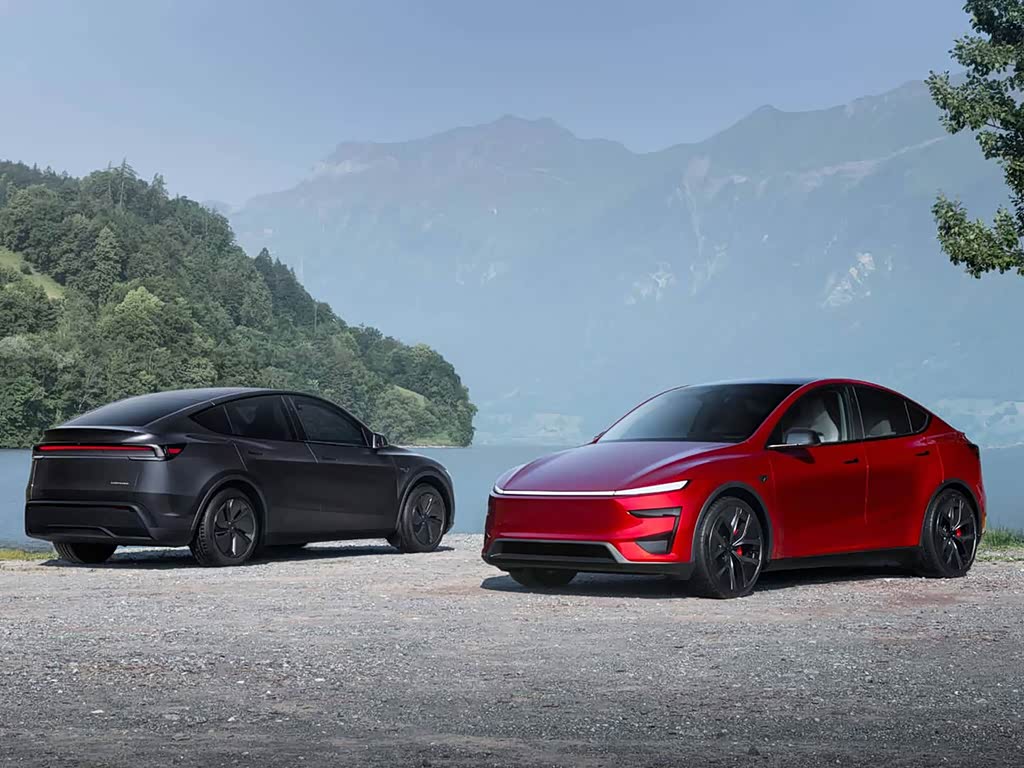
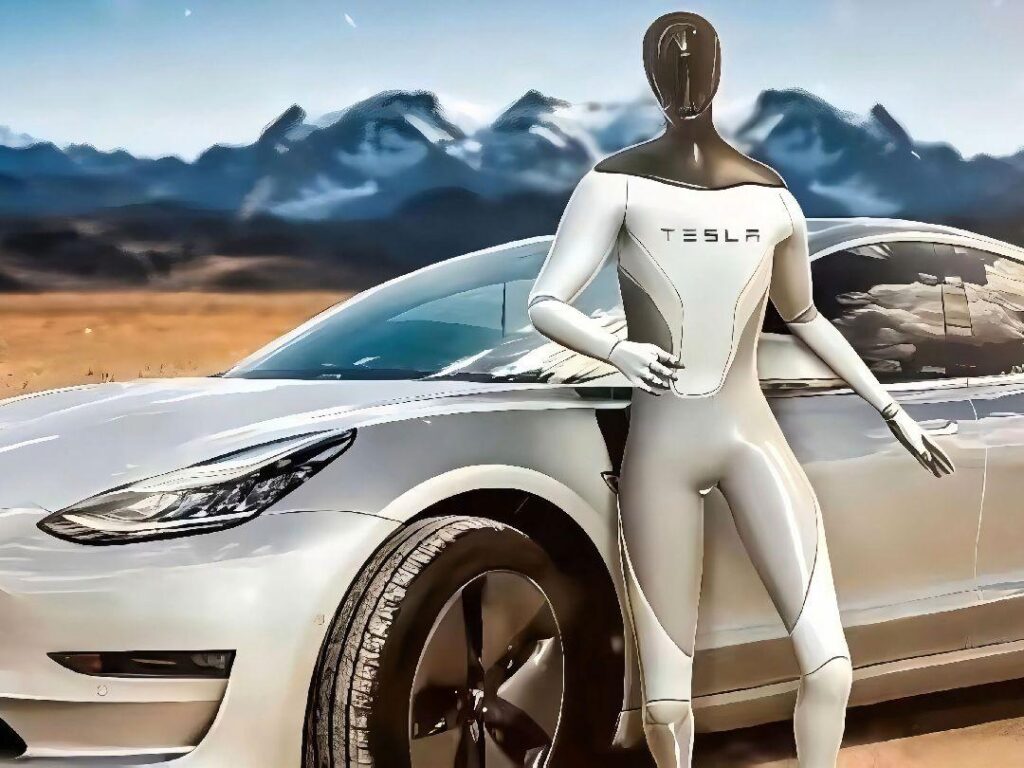
May 21, 2026 marks a historic milestone for the global automotive industry, as the last batch of Tesla Model S and Model X vehicles rolled off the production line at the company’s Fremont Factory in California. These two iconic models, which underpinned Tesla’s rise and set the global benchmark for premium all-electric vehicles, have officially ceased production. In a transformative strategic move, the original production lines will be fully dismantled and reconstructed within four months to exclusively manufacture Tesla’s Optimus humanoid robots, with a planned annual production capacity of one million units. This pivotal shift heralds Tesla’s evolution from an automaker to a physical-world AI company, bringing Elon Musk’s trillion-dollar humanoid robot empire vision to fruition. The Model S and Model X stand as pioneering legends in the history of electric mobility. Launched in 2012, the Model S revolutionized the automotive landscape with a 426-kilometer maximum range and exceptional acceleration performance, dismantling the long-standing stereotype that electric vehicles were merely slow, commuter-only machines. It first proved that electric cars could match and even outperform luxury gasoline-powered vehicles in every key dimension. The Model X followed in 2015, redefining the standards of premium electric SUVs with its signature falcon-wing doors, versatile seven-seat layout, and industry-leading safety features. Boasting a 14-year production run for the Model S and an 11-year tenure for the Model X, the two vehicles have not only served as the cornerstone of Tesla’s business growth but also propelled electric mobility from a niche luxury novelty to a mainstream daily necessity. With cumulative global sales exceeding 3 million units, they have spearheaded the worldwide wave of automotive electrification. The discontinuation of the Model S and Model X stems from Tesla’s proactive strategic adjustment, rather than sluggish market performance. Industry data shows that Tesla delivered 1.6 million Model 3 and Model Y units globally in 2025, while sales of its high-end Model S and Model X amounted to merely 50,000 units, reflecting the brand’s long-term market focus on the mass consumer segment. As Elon Musk stated, “The Model S and X are labor-of-love creations, but the future belongs to robotics and AI.” Phasing out these two flagship models allows Tesla to concentrate resources on high-potential tracks, including humanoid robotics, autonomous driving, and self-developed AI chips. As the cradle of Tesla’s automotive manufacturing, the transformation of the Fremont Factory carries far-reaching significance. Its original Model S/X production lines will be completely renovated within four months to build dedicated production systems for Optimus humanoid robots, with a phase-one annual capacity of one million units. Meanwhile, Tesla’s Texas factory is preparing for the construction of second-generation production lines, targeting an annual output capacity of up to 10 million units. Built on Tesla’s mature battery, motor, and AI technologies inherited from its electric vehicles, the Optimus humanoid robot is essentially an intelligent mobile agent with limbs. It is designed to replace humans in repetitive factory operations, household service tasks, and high-risk work scenarios. Musk predicts that the humanoid robot market will eventually surpass the scale of the global automotive industry, with the sector’s total valuation reaching $25 trillion by 2050. Tesla’s strategic transformation represents a fundamental leap from “building wheels” to “creating intelligent agents”. Going forward, the company’s automotive business will focus on consolidating its mass-market presence with the Model 3 and Model Y, while expanding segmented tracks: the Cybertruck will serve as an autonomous driving freight platform, and the Cybercab will anchor unmanned travel services. Humanoid robots will become Tesla’s new core growth engine, leveraging its industry-leading AI algorithms, self-developed chips, and mature large-scale manufacturing capabilities to seize the blue-ocean global humanoid robot market. Industry analysts regard Tesla’s discontinuation of the Model S/X and shift to robot production as a classic case of technological dimensionality reduction. While traditional automakers remain trapped in fierce internal competition over fuel vehicles and ordinary electric cars, Tesla has broken free from the confines of the automotive industry to lay out the next generation of intelligent end devices—humanoid robots. This forward-looking strategic vision constitutes Tesla’s core competitive edge and keeps it at the forefront of global technological innovation. The sweeping transformation has sparked heated discussions across online platforms, with netizens remarking that a new era is dawning for Tesla. “The Model S and X hold nostalgic value for a generation. It’s a pity to see them discontinued, but Tesla’s pivot to robotics is absolutely groundbreaking.” “Elon Musk never plays by the rules. Shifting focus from car manufacturing to robotics shows unparalleled strategic vision.” “An annual capacity of one million units means Tesla is poised to dominate the humanoid robot market.” “Cars are just a transitional product. AI-powered humanoid robots represent the true future, and Tesla sees the bigger picture.” For consumers, the retirement of the Model S and X marks the end of a glorious automotive era. Yet Tesla’s bold transformation is set to deliver more disruptive technological products. In the future, as Optimus robots penetrate factories and households, reshaping human production and lifestyles, the world will come to recognize that Tesla has never been a mere automaker, but a relentless tech giant dedicated to subverting industries and empowering innovation.

End of an Era: Tesla’s Final Model S/X Roll Off Production Lines as Factory Shifts to Humanoid Robot Manufacturing Read More »

Xiaomi SU7 vs Tesla Model 3: Which Electric Sedan Dominates in 2026?

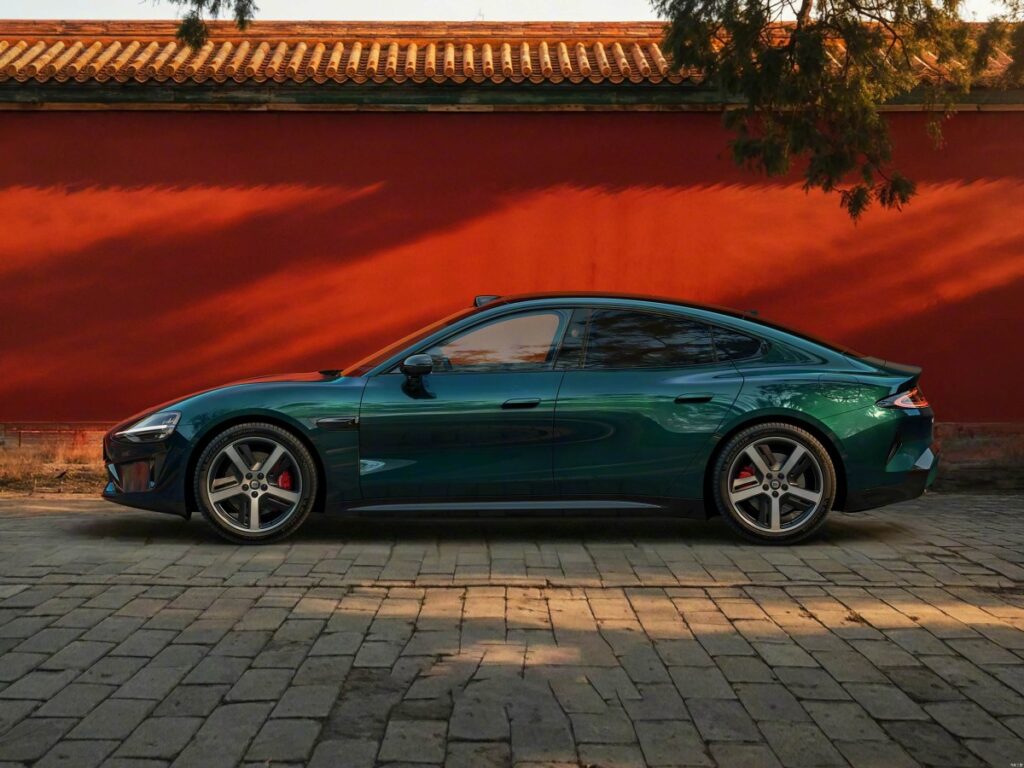
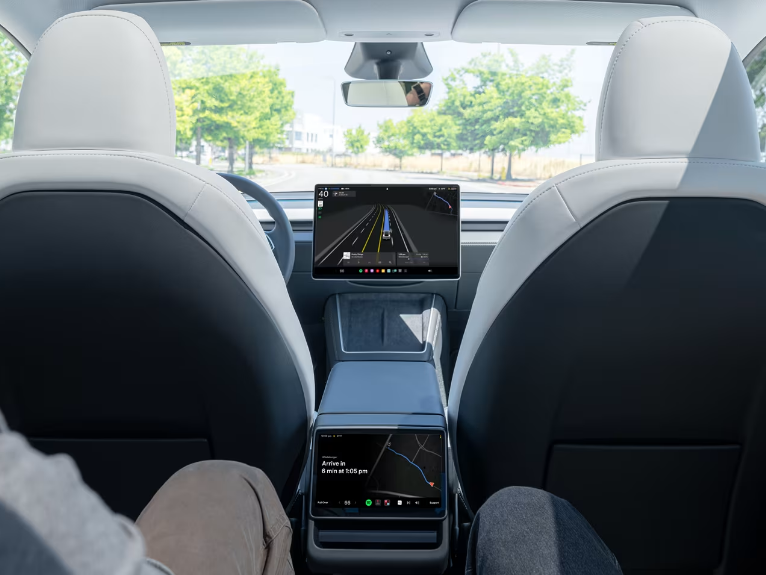
The compact-to-midsize electric sedan segment has long been ruled by one undisputed king: the Tesla Model 3. For years, it has set the benchmark for EV efficiency, smart driving technology, and global mass-market appeal. However, a new powerhouse has arrived to challenge Tesla’s throne. The Xiaomi SU7, the debut electric vehicle from tech giant Xiaomi, has exploded onto the scene with eye-catching specs, premium build quality, and a tech-integrated experience that directly targets Tesla’s core audience. If you’re shopping for a stylish, practical, and high-performance electric sedan in the $30,000–$40,000 price range, these two models are undoubtedly your top contenders. Today, we’re breaking down every key dimension — performance, range, charging speed, intelligence, interior experience, and value — to help you decide: Is the new Xiaomi SU7 a better pick than the timeless Tesla Model 3 in 2026? Positioning & Exterior Design: Minimalism vs. Sporty Sophistication The design philosophies of the Model 3 and SU7 reflect their brand DNA perfectly. The Tesla Model 3 sticks firmly to Tesla’s iconicultra-minimalist electric design. With no redundant body lines, a closed-off front grille, sleek LED headlights, and a smooth fastback silhouette, its look is timeless, aerodynamically optimized, and instantly recognizable worldwide. It’s a design that prioritizes function over flair, catering to users who prefer low-key, durable aesthetics. In contrast, the Xiaomi SU7 adopts a more aggressive, premium sporty design. As a C-class mid-large sedan (one level above the Model 3’s B-class positioning), it features a longer wheelbase, a sculpted body, hidden door handles, and a sleek fastback roofline that delivers a more luxurious and dynamic visual impact. Its design balances sportiness and elegance, appealing heavily to younger buyers who want a car that stands out on the road without sacrificing practicality. Aerodynamically, both models excel: the Model 3 boasts a proven low drag coefficient, while the SU7’s optimized body structure achieves even better airflow efficiency, laying a solid foundation for its superior battery range. Power & Driving Performance: SU7 Takes the Lead in Raw Speed Performance is where the Xiaomi SU7 first shocks users, as it outperforms the standard Tesla Model 3 in almost every core power metric. The rear-wheel-drive Tesla Model 3 delivers 264 horsepower, a top speed of 200km/h, and a 0–100km/h acceleration time of 6.1 seconds — more than enough power for daily commutes and highway cruising. The Xiaomi SU7’s standard version leaves the Model 3 behind in raw performance. Equipped with the V6s Plus motor with a maximum rotation speed of 22,000rpm, it outputs 320 horsepower, hits a top speed of 240km/h, and sprints from 0–100km/h in just 5.28 seconds. For speed enthusiasts, the SU7 Max variant pushes acceleration to an astonishing 3.08 seconds, a figure that rivals luxury performance EVs far above its price range. In terms of driving tuning, Tesla retains its signature tight, pure sporty handling with stiff suspension and precise steering feedback, ideal for drivers who love immersive control. The Xiaomi SU7 strikes a smarter balance: its suspension filters out most road bumps for a comfortable daily ride, while retaining sharp response for spirited driving, making it more family-friendly without compromising sporty fun. Range & Charging: SU7 Wins Endurance, Tesla Dominates Charging Network Battery range and charging convenience are the two most critical concerns for EV buyers, and this round brings a clear differentiation between the two models. The standard Tesla Model 3 offers a CLTC range of 606km, while the long-range version reaches 830km. Tesla’s biggest advantage lies in its global supercharger network. With widespread, mature supercharger stations worldwide, the peak charging power of 250kW enables ultra-fast charging, and the system boasts exceptional stability and compatibility — a huge plus for long-distance travel. The Xiaomi SU7 takes the lead in pure range capability. Its standard version delivers a 700km CLTC range, and the SU7 Pro version tops out at 902km, effectively eliminating daily range anxiety. The model supports an 800V high-voltage platform (higher than the Model 3’s 400V platform in base versions), bringing theoretical faster charging potential. In actual use, the SU7 completes 10%–80% fast charging in approximately 30 minutes. The only shortcoming for Xiaomi is its charging network. As a new EV player, its supercharger coverage is far less extensive than Tesla’s, and long-distance travel during peak holidays may bring longer queuing times. For daily urban commutes, however, the SU7’s superior range fully meets weekly charging needs. Smart Driving & Cockpit: Tesla’s Algorithm vs. Xiaomi’s Full-Scene Ecology Smart technology is the core competitiveness of modern EVs, and the two brands take completely different technical routes. Tesla’s strength lies in its autonomous driving algorithm accumulation. Its standard Autopilot and optional FSD (Full Self-Driving) are the most mature mass-produced smart driving systems globally. With massive road data accumulated over years, Tesla delivers stable, reliable assisted driving performance with smooth logic for lane changes, cruise control, and obstacle avoidance. The downside is its minimalist cockpit: a single central screen cancels almost all physical buttons, which takes time for new users to adapt to, and its in-car entertainment and ecology functions are relatively simple. The Xiaomi SU7 comes with full-stack smart hardware as standard, including lidar and high-precision mapping modules that most base Model 3 versions lack. Its smart driving system performs excellently in urban complex road conditions, with precise identification of traffic lights, pedestrians, and non-motor vehicles, and smoother automatic parking performance. In terms of the cockpit experience, Xiaomi’s ecological advantage is overwhelming. Seamlessly connected with Xiaomi’s mobile phones, tablets, and smart home devices, the SU7 supports one-screen multi-tasking, ultra-smooth screen interaction, and rich third-party app adaptations. For users embedded in the Xiaomi smart ecosystem, the in-car experience is more intelligent, convenient, and interactive than Tesla’s relatively rigid system. Interior & Space: SU7 Offers More Premium & Spacious Experience Step inside the two cars, and the grade difference is immediately obvious. The Tesla Model 3’s interior is notoriously minimalist, with a large area of hard plastic, simple trim, and a single floating central screen. While durable and clutter-free, it lacks luxury texture, and the overall

Xiaomi SU7 vs Tesla Model 3: Which Electric Sedan Dominates in 2026? Read More »

Will pure vision-based autonomous driving definitely beat LiDAR

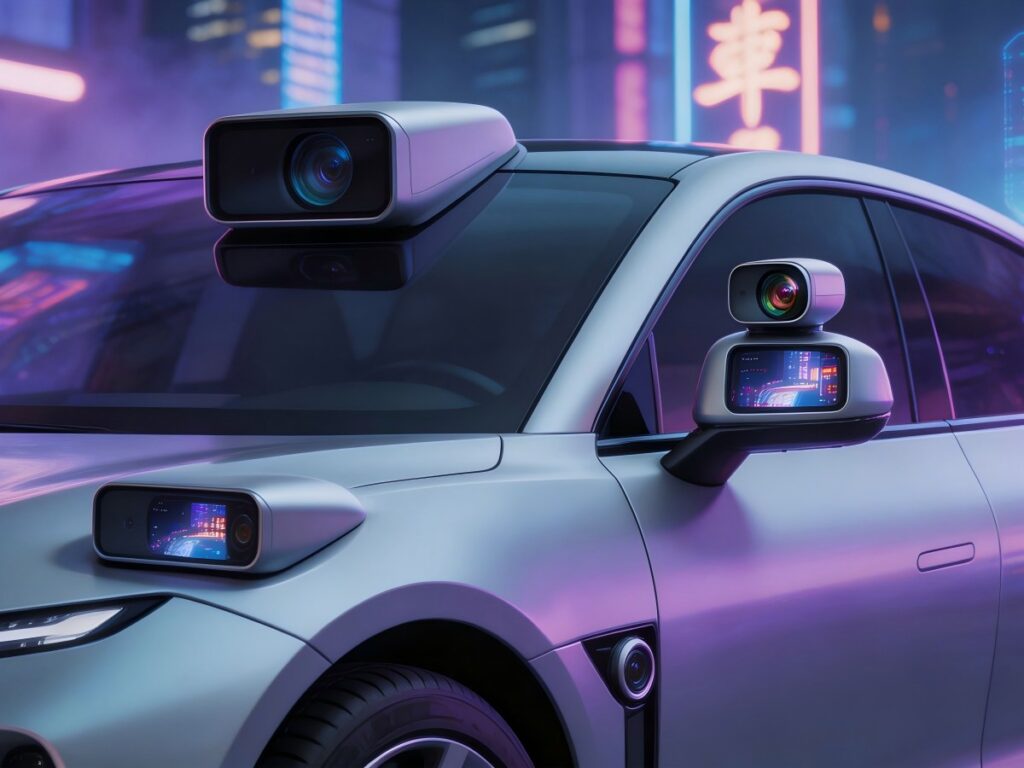
Recently, Tesla’s autonomous electric vehicle Cybercab officially entered production in North America, becoming the world’s first mass-produced Level 5 autonomous vehicle without human intervention. According to media reports, Tesla, through a self-certification compliance pathway, is not subject to the U.S. National Highway Traffic Safety Administration (NHTSA)’s annual exemption quota of 2,500 autonomous vehicles, enabling unlimited production capacity. As recently as last December, a Tesla owner completed a 10,000-mile intercontinental drive using the FSD V14.2 system, crossing 24 U.S. states with zero human intervention throughout the journey. Meanwhile, in December 2025, a large-scale power outage occurred in San Francisco, causing all traffic lights to fail. Overnight, 300 Waymo autonomous taxis were completely paralyzed at intersections, unable to move. Within 6 hours, there were more than 20 related complaints, and fire vehicles were unable to pass. Later that night, Waymo announced the suspension of its entire fleet in the city. A single power outage crippled an entire city’s autonomous driving system. One system was completely paralyzed by an infrastructure failure, while the other could cross an entire country without human hands touching the steering wheel. Behind this lies the biggest technological route dispute in the history of autonomous driving. 2026: Pure Vision Autonomous Driving Has Won In March 2024, Tesla released the FSD V12 version. This version achieved a breakthrough previously unimplemented: discarding all approximately 300,000 lines of handwritten C++ driving rule code and replacing it with an end-to-end neural network. Previous autonomous driving systems followed this logic: brake when encountering a red light, yield when detecting pedestrians, and slow down, observe, yield, and then merge when entering a roundabout. For each scenario, engineers needed to write a rule. 300,000 lines of code covered thousands of scenarios. But the real world contains infinite possibilities, and engineers can never exhaust all rules with code alone. FSD V12’s approach is completely different. It does not tell the vehicle how to drive; instead, it provides the model with millions of video clips of human driving for it to learn independently. The input is only camera images, and the output is directly steering wheel angle, throttle, and brake commands, with no human-prescribed rules in between. As Elon Musk put it: “Not a single line of code says ‘this is a roundabout.’” For this reason, the industry has called V12 the “ChatGPT moment” in the field of autonomous driving. ChatGPT does not rely on human-written grammatical rules to form sentences, but rather learns the essence of language from trillions of words. Similarly, V12 does not rely on human driving rules to control vehicles, but comprehends the essence of driving from billions of miles of driving data. From the perspective of version iteration, V12.3 had a critical disengagement (requiring human takeover) approximately every 180 to 228 miles; V13.2 improved this indicator to 371 to 493 miles; V14.2 exceeded 1,400 miles. The newly released V14.3 version is defined by Tesla as the final piece of the puzzle to achieve unsupervised FSD—with upgraded reinforcement learning training and a 20% reduction in inference latency. From V12 to V14, the safety distance has increased by 8 times in less than two years. During the 2026 Q1 earnings call, Elon Musk made a weighty statement: V14 is significantly safer than human driving. This means that autonomous driving has crossed a threshold for the first time—it is no longer approaching humans, but surpassing them. At the same time, three industry signals support this judgment. First, the weak are eliminated. Apple abandoned Project Titan; Argo AI collapsed completely. It is not that the technology is unfeasible, but that funding is unsustainable. R&D costs are squeezing out players without a data flywheel. Second, the survivors are accelerating. Waymo completes 500,000 rides per week, and Baidu has served more than 20 million times cumulatively. But Tesla already has 1.28 million FSD paid users, with a cumulative driving distance exceeding 10 billion miles—nearly 50 times that of Waymo. The data advantage is not linear growth, but exponential: more data trains a better model, a better model attracts more users, and more users generate more data. Third, the wind is shifting. XPeng Motors removed LiDAR from multiple models and launched a pure vision solution; NIO shifted to an end-to-end technical route; China’s largest ADAS supplier developed an end-to-end system that does not rely on LiDAR. Even Waymo itself reduced the number of sensors from 40 to 23 in its sixth-generation system. The direction is clear: more AI, fewer sensors. Therefore, 2026 has become the first year, not because LiDAR has become cheaper, nor because a certain city has put hundreds more robotaxis on the road, but because a fundamental technological paradigm shift has occurred: software has proven for the first time that it can replace hardware, and AI driving has surpassed human driving in a statistical sense for the first time. The Structural Pitfalls of LiDAR Waymo is currently the only company operating large-scale fully autonomous taxis. With 500,000 rides per week, operating 3,000 vehicles in 10 U.S. cities, it has raised a total of 16 billion US dollars and has a valuation of 126 billion US dollars. This is the most commercially successful autonomous driving enterprise to date. However, Waymo relies on three core elements: high-precision maps, LiDAR, and remote operators. These three work well together under ideal conditions, but the real world is not always ideal. During the San Francisco power outage, all traffic lights failed, and 300 Waymos were collectively paralyzed. Its logic is to treat unmarked intersections as four-way stops, but when the entire city loses power, every intersection becomes a four-way stop, and requests to the remote control system are instantly overwhelmed. A single infrastructure failure led to the entire fleet going offline. In December 2025, a Waymo carrying passengers in Los Angeles drove straight into an armed police arrest scene. Police officers were holding guns, and the suspect was lying on the ground. After slowing down, the Waymo stopped next to the suspect, as the system could not understand the meaning of

Will pure vision-based autonomous driving definitely beat LiDAR Read More »

Breaking News! Tesla Officially Announces the FSD Supervision Edition

May 21 — Today, Tesla officially released the latest list of countries and regions where FSD Supervised is available on social media platforms. China is included, along with nine others: the United States, Canada, Mexico, Puerto Rico, Australia, New Zealand, South Korea, the Netherlands, and Lithuania. Lithuania is the newest addition to this list, marking the second European country where Tesla’s FSD has been approved for use. Covering 10 countries represents the largest expansion of Tesla’s FSD to date. Tesla’s FSD stands for Full Self-Driving. However, since drivers must remain fully attentive and ready to take control of the vehicle at any time while using it, it is referred to as FSD Supervised. This is Tesla’s Level 2 advanced driver-assistance feature available to the public. So, is FSD with Supervision now actually available in China? When asked by Tesla’s official customer service whether FSD with Supervision is available, the response was: “We are actively advancing preparations for intelligent driver-assistance software in accordance with relevant regulations issued by the country in recent years.” Currently, there are no updates regarding FSD on Tesla’s official website, nor have any users reported receiving updates on social media platforms.

Breaking News! Tesla Officially Announces the FSD Supervision Edition Read More »