Bosch, the world’s largest automotive supplier, recently announced that it has secured a major order from Mercedes-Benz. Bosch will produce a large number of electric motors for the Stuttgart-based automaker to supply its next-generation electric drive systems, with the contract covering the entire 2030s.
Unlike Bosch’s other customers, this order from Mercedes-Benz does not involve complete electric drive axle systems—that is, products that combine electric motors, power electronics, and transmissions into a fully integrated drive unit. Instead, Mercedes-Benz will procure only the electric motors from Bosch and combine them with drive units developed in-house. Mercedes-Benz has already adopted this approach, for example, in the all-new fully electric CLA, where the rear axle is equipped with the company’s proprietary ATS 2.0 drive unit, while the all-wheel-drive version features an additional electric motor from a supplier on the front axle.
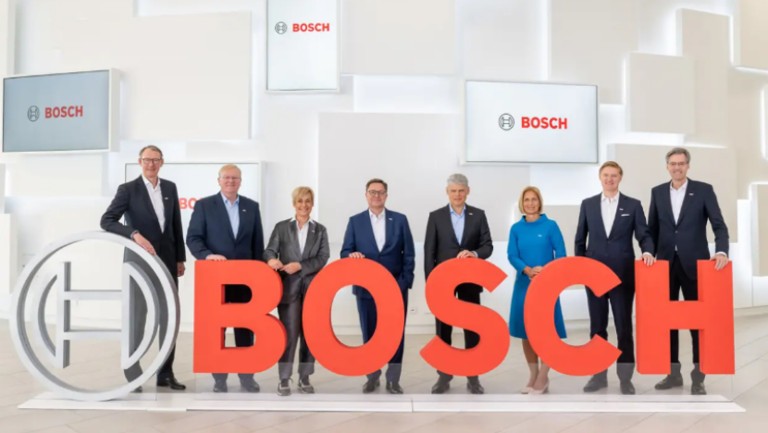
For Bosch, this order is of great significance. The company has recently faced pressure to cut jobs and is in urgent need of large-volume orders, particularly in the growing electric vehicle market, rather than in its traditional internal combustion engine business. Markus Heyn, CEO and Chairman of Bosch Mobility, stated: “This new order reaffirms our long-standing partnership with Mercedes-Benz and demonstrates our ability to successfully contribute our expertise to technically demanding projects.”
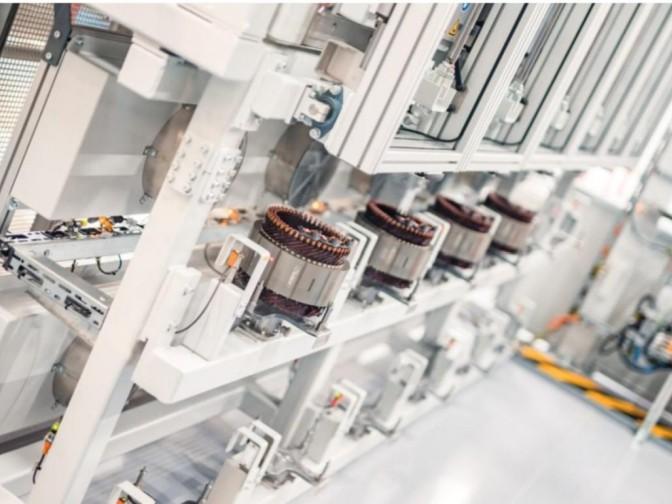
Bosch did not disclose the specific electric motor models Mercedes-Benz will procure, but emphasized that it will supply motors across various power ratings. Bosch highlighted that its motors achieve exceptionally high efficiency of up to 98% while enhancing power density. The key to this advantage lies in its innovative winding technology, which increases power density, reduces weight, and offers greater flexibility in motor design.
Additionally, Bosch’s motors are equipped with a special rotor oil-cooling system that optimizes heat dissipation. Another advantage lies in the use of a scalable platform architecture, which allows for easy integration into various axle designs by adjusting the motor’s length to match the required power output. According to Bosch’s product information, its motors can deliver power outputs of up to 500 kilowatts, with available torque of up to 1,000 Newton-meters, and operate within a voltage range of 400 to 850 volts.
Bosch emphasizes that it currently provides electric mobility-related technologies and solutions to more than 50 automakers worldwide. By 2026, the company plans to produce over 7 million electric drive-related components. According to Bosch, the company currently produces approximately seven motors per minute globally.